By Merve Sagiroglu
I spend most of my day in a classroom with preschool-aged children. I have profound hearing loss in one ear, and a busy classroom is one of the hardest places for me to hear. When a child tugs my sleeve to say something, I lean in, focusing with everything I’ve got and hoping I don’t miss a word.
Every day, I face these two challenges:
- Background noise. Imagine the room alive with chatter from little voices, music weaving through the air, and a fan humming above it all. Layer upon layer, those sounds blur together, and the voice I need to hear vanishes. To keep up, I have to listen with my whole being, and by the end of the day I’m often drained. Researchers call this listening fatigue, common in both children and adults with hearing loss (Bess & Hornsby, 2014).
- Sound localization. When a child calls my name from across the room, I turn the wrong way half the time. It might sound small, but it takes a lot of mental effort to search the room each time.
In this article, I hope to share some simple ways to help children with UH (Unilateral Hearing) feel supported in early childhood settings, and how you can work together with your child’s educators to make their classroom experience more inclusive.
Why UH deserves our attention
Research shows that single-sided hearing can shape a child’s entire school experience. One study found that children with unilateral or mild hearing loss faced emotional and behavioural struggles just as often as kids with more severe hearing differences. Hyperactivity, trouble joining in, and feeling left out were common. Younger children, aged 5 to 6, struggled more than older ones (Ong et al., 2023), which shows how much the early years matter.
What can a classroom teacher do to help kids with UH? Here’s where small choices and shifts can make a difference:
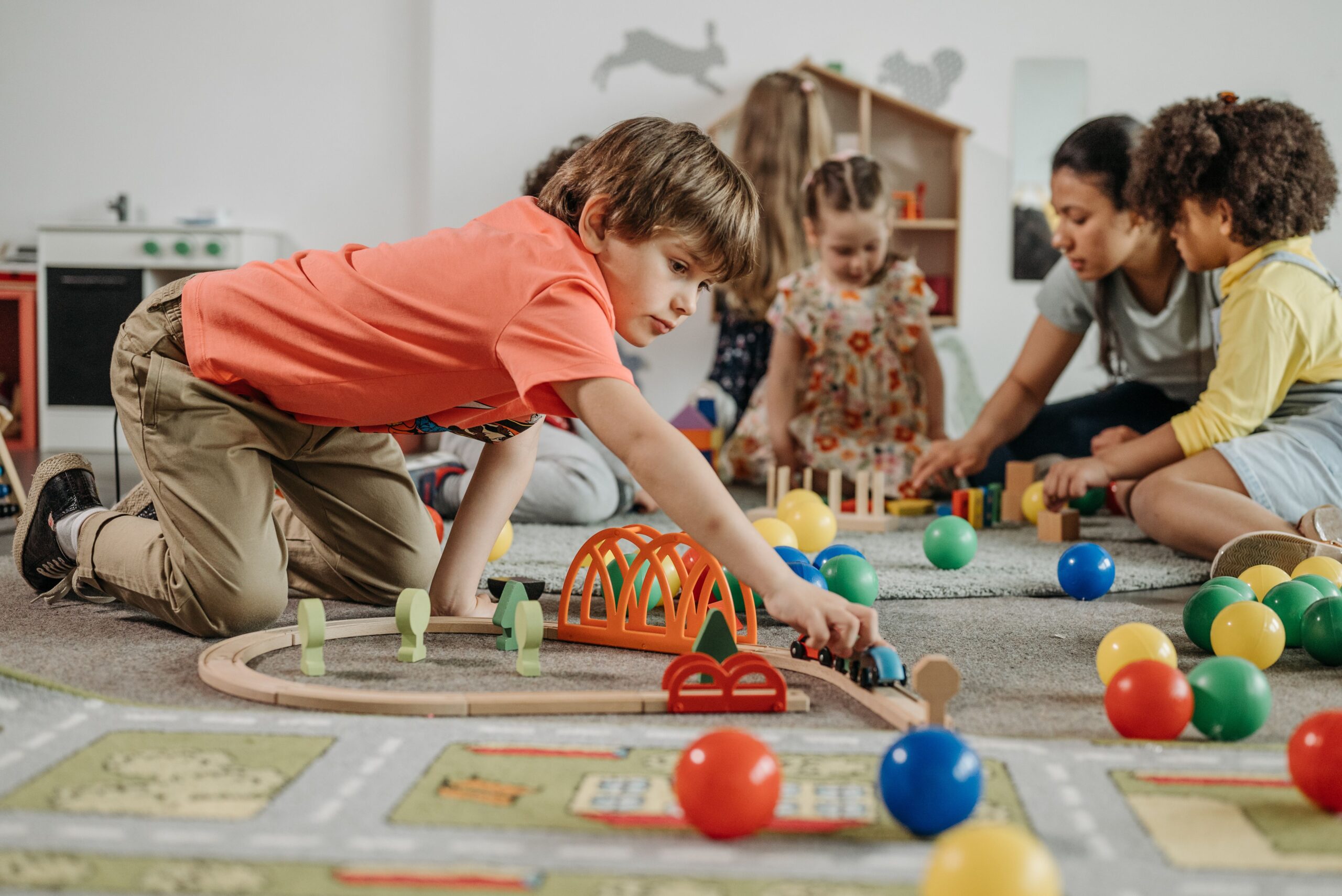
- Soften the sounds. Hard floors and walls bounce voices everywhere. A rug, soft ceiling tile, or felt on chair legs can turn the roar into a gentle hum (American Speech-Language-Hearing Association). An acoustic ceiling isn’t always easy to add, but rugs, carpets, and soft tips on chair legs are simple, low-cost changes most classrooms can make. Ordinary sounds like scraping chairs, air conditioner hum, and background music make it harder for children with hearing differences to follow speech (Taylor et al., 2023).
- Make the teacher’s voice shine. What matters most is making sure the teacher’s voice rises above the clatter. This is called the signal-to-noise ratio. Children with hearing differences need the educator’s voice to be 15 to 20 decibels above the background. Younger kids especially need an even bigger boost (Taylor et al., 2023; Meijer et al., 2025). Something as simple as turning off background music during group time can help.
- Let the kids take charge. A wall-mounted decibel meter with child-friendly colour cues, such as green for comfortable and red for too loud, turns noise into something children can see and control together. Involving young children in learning about and managing noise levels has been shown to work in preschool settings (Bulunuz et al., 2017). This simple tool helps every child take an active part in keeping background noise under control. This interesting study shows how everyone benefits from this practice, not just the child with a hearing difference.
- Arrange for connection. U-shaped or circle seating helps everyone see each other’s faces. For a child with UH, seeing who’s talking means they don’t have to search for the voice (Taylor et al., 2023).
- Make it visual. A visual daily schedule and clear transition cues for snack, outdoor time and clean-up mean a child doesn’t have to stay on high alert, watching others for clues about what’s happening next. Emergency and fire alarms should also include flashing lights, not just sound (Canadian Hearing Services, n.d.).
- Watch for listening fatigue: Meltdowns, zoning out, or deep fatigue late in the day might signal listening fatigue. Building quiet moments into routines or providing a calm space in the classroom can help.
- Be partners-home and school. Families know their child best. When parents and teachers keep talking and sharing, a child’s needs are more likely to be seen and met.
Questions to open up the conversation with your child’s school:
- Where does my child sit during group time, and can they see the speaker’s face?
- What’s being done to soften background noise?
- How are transitions and schedule changes made clear; do they use visuals?
- What’s the best way for us to share what works for my child, both at home and at school?
One last thought
None of these changes cost much or take magic. As both an educator and a parent myself, I encourage you to invite your child’s teachers into the conversation and share these simple ideas with them. Sometimes turning off the background music, making a small change to the seating arrangement and noticing the signs of listening fatigue can go a long way toward making your child’s day a little easier.
Note: This post draws on two papers I wrote as part of my Early Childhood Education studies at the University of British Columbia:
Supporting Children with Unilateral Hearing Loss in Early Childhood Settings (2025)
Designing an Inclusive Classroom: From a Parent’s Perspective (2025)
References
American Speech-Language-Hearing Association. (n.d.). Classroom acoustics.https://www.asha.org/public/hearing/classroom-acoustics/
Bess, F. H., & Hornsby, B. W. Y. (2014). Commentary: Listening can be exhausting—Fatigue in children and adults with hearing loss. Ear and Hearing, 35(6), 592–599. https://doi.org/10.1097/AUD.0000000000000099
Bulunuz, M., Ovali, D., Çıkrıkçı, A. İ., & Mutlu, E. (2017). An evaluation of educational practices concerning noise level and noise control in nursery school: An action research. Education and Science, 42(192), 211–232. https://doi.org/10.15390/EB.2017.7215
Canadian Hearing Services. (n.d.). Classroom accessibility guide.https://www.chs.ca/sites/default/files/mhg_images/CHS003_AccessibilityGuide_EN_APPROVED.PDF
Meijer, A., Benard, M. R., Woonink, A., Başkent, D., & Dirks, E. (2025). The auditory environment at early intervention groups for young children with hearing loss: Signal-to-noise ratio, background noise, and reverberation. Ear & Hearing, 46(3), 827–837. https://doi.org/10.1097/AUD.0000000000001627
Ong, J. J., Smith, L., Shepherd, D. A., Xu, J., Roberts, G., & Sung, V. (2023). Emotional behavioral outcomes of children with unilateral and mild hearing loss. Frontiers in Pediatrics, 11, Article 1209736. https://doi.org/10.3389/fped.2023.1209736
Taylor, K., Neild, R., & Fitzpatrick, M. (2023). Universal design for learning: Promoting access in early childhood education for deaf and hard of hearing children. Perspectives on Early Childhood Psychology and Education, 5(2), Article 4. https://doi.org/10.58948/2834-8257.1059
