A Whole New World

When I was two years old I was diagnosed with a severe to profound hearing loss. I was the first deaf person my parents had ever met. Decisions had to be made, and my parents made the best decisions they knew how for me at the time: they fitted me with hearing aids, enrolled me in speech therapy, and chose to mainstream me.  My main mode of communication with my world was through speech, and through lip-reading.

Growing up, I never really complained much about my hearing loss. Truth is, I didn’t spend much time thinking that I had one. I lip-read fairly well, and save for an FM-System and my hearing aids, as well as hearing resource teachers, I didn’t really see myself as any different than my peers. I really wanted to fit in with the world I was in, which was the hearing world and the only world I knew of at the time. There were times when I would be assertive, like if I was to watch a movie, I knew to ask for closed captions, and I knew to explain to people that I was lip-reading them. (The lip-reading part got me friends in school, especially when people realized it was an extremely useful tool in eavesdropping, but one I tried not to participate in too much – people deserved their privacy.)

I did okay in school – I excelled at reading, writing and social studies, but in math and science I fell behind. I was an okay student, and I did what I had to do to get by. I did love school, but I never looked forward to it, simply because it was both frustrating and exhausting in terms of how much work it was to keep up to hear.

My frustration was at an all-time high when in high school, my hearing loss took a turn for the worse and I was no longer getting by on my own:  my hearing that I had couldn’t support me anymore. It was at that point an interpreter was assigned to me. Having a sign language interpreter there was the first time I really accessed everything I had been missing out on – PA announcements, movies that weren’t captioned, what students were saying in the back of the room. Although at the time I was not fluent in sign language, I understood everything my sign language interpreter was saying (she signed a mixture of ASL and English); I really believe that people who are hard of hearing or deaf are amazing adapters and that our brains autonomously adjust to things we know will help us communicate.

After high school, I enrolled at the Youth in Transition Program provided by the Provincial Services for the Deaf and Hard of Hearing, where I met other deaf youth who signed and had a counsellor who supported me in my educational pursuits. It was then that I learned about Gallaudet University – the world’s only school for the deaf and hard of hearing teaching exclusively in American Sign Language (ASL). It is thanks to my hearing resource teacher in my final years of high school and the Deaf community in Vancouver who supported and encouraged me in my pursuit of immersing myself in ASL that I drew the courage to transfer to Gallaudet University.

Gallaudet isn’t like any other place I’ve ever gone to. For me, it encapsulates everything that Aladdin and Jasmine were singing about in their movie, about a whole new world. Especially the part about no one to tell us “no”, because at Gallaudet, everything is completely accessible, on a level I never knew was possible. Gone are the days of PA announcements being inaccessible – they’re done on a TV screen in sign language. Everything is taught in Sign Language directly, and the class discussions that were always hard for me to be a part of suddenly become engaging and entertaining, everyone signing.

One of my fondest memories of Gallaudet is one of the first days of classes when I transferred in and the teacher had announced we were watching a movie. I unconsciously raised my hand to ask the question I had been asking my entire life: is the movie closed captioned? After I asked, I caught myself in a smile as everyone around me looked at me and laughed with me: of course it was. This was a school where everyone was like me. Where we weren’t “hard of hearing” or “deaf” or “disabled”, we were students having our dreams come true, within a world that wasn’t stopping us. Teachers actually know you by name, and the biggest class size I’ve had was with 20 people.  I’ve become a better public speaker because so many of our classes require presentations where we receive feedback and support from both teachers and peers.

It’s been said that an education isn’t worth a great deal if it teaches you how to make a living, but not how to make a life (unknown). At Gallaudet, I find this has come to be true. Gallaudet’s teaching doesn’t end when classes are over, it stretches on, to the cafeteria lunches and dinners where you can engage with your peers in accessible communication and sometimes out -of- this-world debates. The typical late night college study sessions consist of music – songs are signed in ASL combining both worlds into one. Fire alarms that consist of flashing lights instead of sound, proving you don’t always need to hear in an emergency.

Before Gallaudet, I was an average student, never really putting the time into school to excel. At Gallaudet, however, that all changed. I’ve joined a sorority. I’ve taken amazing classes like the BioPsychoSocial Aspect of HIV/AIDS. I have been on the Dean’s List for several semesters and have won several scholarships. I even got to participate in a federal internship.

I care about my education now, because it’s accessible to me and I have people around me who challenge me daily without a language barrier. I met one of my best friends through the Honours Program at Gallaudet, and we continuously push each other to become better scholars as well as people; she’s now pursuing her doctorate degree, and every time I’m not sure I can do it or I start to doubt myself, I remind myself that she has set the bar higher and that I should too.

I have met some of the most incredible people at Gallaudet. They have taught me patience, kindness and resilience. When I have doubted myself, they were there, picking me up, encouraging me in a way that I have never had before, because they know what it’s like to both hear, and to not. Sometimes, no explanation is necessary, because they’ve been in my exact shoes before. And they inspire me, because for the first time in a long time, I know that I’m not alone.

My time at Gallaudet is coming to an end, but I won’t forget the lessons I’ve learned and I cherish every moment I have spent there. I don’t simply feel like I’m leaving a college, I feel like I’m leaving a home. Gallaudet has instilled in me a pride for being deaf and hard of hearing. I take comfort in knowing that I have been to a whole new world, one that is filled with beautiful hands and beautiful dreams, and the knowledge that nothing is impossible if you know how to make a life and not just a living.
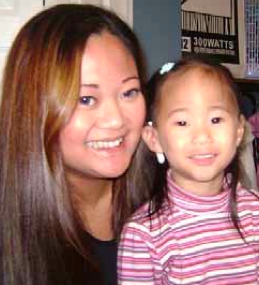
Posted in Featured, Newsletter - Feb 2012, Newsletters | Comments Off on A Whole New World

Crash Crawly’s Family Fun Day

BC Hands & Voices is organizing a Family Fun Day at Crash Crawly’s Adventure Playground in Coquitlam on Sunday, March 4th, from 10am to 1pm. This event is for families with hard of hearing ordeal children and teens and CODAs (children of deaf adults), along with their parents.

Fun Activities for the Whole Family

Soft Play: Climb, crawl, and slide for way through our maze – do you dare conquer the black slide?

Toddler Area: “Comfy Land Area” for children three and under.

Ball Pits, Train, Jeeps

Laser Tag: An updated Egyptian theme “Valley of the Kings” feature two stories, a mirror maze, bridges, lookout points and more! Great for teens.

Ballocity: Two floors with six ball blasters, a ball dump, a ball volcano, and a ball vacuum.

RSVP Required

Register by Sunday, February 26th. Online registration at chhaparents.bc.ca or register by calling or texting 604-684-1860.

Cost is only $3.00 per person, and that includes all Crash Crawly’s activities. Drinks and snacks are available for purchase at the concession.

ASL interpreters will be provided.

Crash Crawly’s Flyer – 2012
Crash Crawly’s Flyer – 2012 – Chinese Version

Posted in Events | Comments Off on Crash Crawly’s Family Fun Day

Test

test

Posted in Uncategorized | Comments Off on Test

Join Us For Our 2011 Fall Workshop

Hosted by BC Hands & Voices and Guide By Your Side

Presented by: Angela Clancy, Executive Director of the Family Support Institute

English Printable Flyer
Chinese Printable Flyer

Meeting the needs of everyone in the family can be a challenge – especiallywhen one or more of the children are deaf or hard of hearing.  This interactive workshop will focus on identifying common issues that arise with siblings, as well as strategies, ideas, and resources to help deal with them.  Topics will include:

  •   The needs of all children
  •   Sibling relationships
  •   Parenting strategies (active listening and overall effective communication)
  •   Dealing with conflict
  •   The benefits of growing up with a brother or sister who is deaf or hard of hearing

There will also be time throughout the day for families to socialize and share information with one another informally.

Saturday, October 22nd, 2011 from 10:00 am-3:00 pm.
BC Family Hearing Resource Centre
15220 – 92nd Ave., Surrey (click for map)

Childcare will be provided at no cost – children must be pre-registered.

ASL interpreting will be provided.

Language interpreting may be available for families who do not speak English.  Resources are limited, so please contact us ASAP if you know of a family that requires interpreting.

REGISTER by Wednesday, October 12th using our online form.

Posted in Events | Comments Off on Join Us For Our 2011 Fall Workshop

The Best Fit for One Family

2012 photo Joy“Baby Sign Language is all the rage nowadays!” I exclaimed to myself as I finalized my order on Amazon.ca for Baby Sign Language books and DVDs. I was six months pregnant, and like any other new (and nervous!) mother, I had spent massive amounts of time on an endless quest for information, tips, and latest trends in parenting. I aspired to raise an imaginative and articulate child, and often fantasized of someday having a conversation with my toddler where he or she would tell me stories about their day at preschool, and I was especially looking forward to hearing the ones drawn from the imagination. All my research seemed to suggest the same concept to “Introduce language to your child at an early age.” So it was then that I made the decision to commit to ensuring that my child would be in a language enriched environment, be it spoken or visual.
My DVDs and books had finally come in, I was excited! About five minutes into watching my first DVD, I was already confused. The woman on the television seemed to just be making random hand gestures, and I thought to myself, “This is all supposed to mean something?!” I made sure I knew the basics… “Milk,” “Diaper,” “Bath,” “More,” and “Sleep.” I felt that was enough visual language to let my child know I was making an effort to communicate. Besides, I thought that making sure that I constantly spoke to my child would still be promoting a language enriched environment. Alas, like any other impulse online purchase, the books and DVDs collected dust.
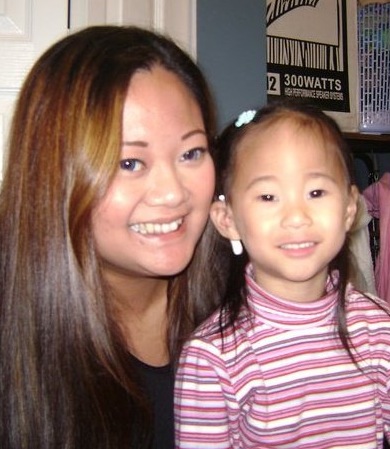
Early Halloween morning, Teanna was born, and she instantly had me wrapped around her tiny little finger. Yes, I was smitten, and I wanted to give her the world. She was a tiny girl, yet in spite of her petiteness, it was already apparent that she had a big and captivating personality. Even as an infant, she seemed to be extremely observant, her eyes wide, a naturally curious expression, and her head constantly turning as if to absorb everything going on in her surroundings. I spoke, sang, and signed the very limited amount of signs I knew with my daughter. She smiled and giggled no matter what I did, she was a happy child, and I, a sleep deprived but nevertheless happy mom. At 8 months old, she signed “diaper,” and when checked, had actually needed a diaper change. I was floored, to say the very least – my child was communicating! At 10 months, she had learned to sign “sleep,” and I would have to gloatingly say that bedtime was always such a breeze. I loved her, and I was happy, but there was a part of me that felt like there was something that was not quite right.
By the time Teanna had turned a year old, she was happy and healthy as ever. However, there still seemed to be some sort of disconnect, a gnawing feeling, if you will. I have had suspicions regarding her hearing since she was born, and it was not until she was 19 months old that she was officially diagnosed to have been profoundly Deaf in both ears. It was a rough and emotional experience, and not only had I felt like I was mourning the loss of something very important, but I was also lost as to what to do next. It was an overwhelming time, filled with so much information from a multitude of resources. It was a time for life-altering and time sensitive decision making, and frankly, I had begun to feel so numb from it all, that it felt like I was simply being carried along the chain of events.
Teanna had immediately gotten fitted for hearing aids, and I felt it was the best decision to choose an intervention program where both a Sign Language Instructor and Speech Language Pathologist would be available. Having an actual instructor for American Sign Language (ASL) made learning it easier. I discovered just how visual the language is, as most of the signs are reminiscent of the English word definition. It definitely was not just a “bunch of random gestures” made in an effort to convey a thought. ASL is an actual language, with grammatical rules that needed to be followed. As much as I found the learning process enjoyable, it took some time for me to feel comfortable using it, even with the instructor. However, as unnatural as it felt, I knew that it would benefit my daughter, so I made an effort to sign with her as much as I could when it was just the two of us. There were many aspects of ASL where I felt slightly awkward. One example being the use of very pronounced, almost exaggerated facial expressions. Raised eyebrows when asking a yes or no question, a furrowed one when asking one that needed a more detailed reply. Pursed lips when describing something that is small, and saying “cha!” with eyes wide to describe something large. It was a time of adjustment.
As with most languages, ASL was accompanied by a culture of its own, the Deaf Culture. Throughout my journey, I have come to learn that Deafies are a very warm and welcoming bunch. I was noticing Deaf people everywhere! I would muster up the courage to approach them in restaurants, at the mall, and I had even found a church that had a Deaf ministry. I had mastered signing, “Hi, my name is Joy. I saw you signing, are you Deaf? I have a daughter who is Deaf, and I am learning Sign Language very slowly.” When a Deaf person sees you making an effort to communicate in their language, their eyes light up, and they are more than willing to sign extra slowly, or even try and speak to have a conversation with you. It was a great feeling when I saw that I, a hearing person, could have a sensible conversation with a Deaf person. In the Deaf Culture there is Deaf Pride, which states that a Deaf person can do anything except hear. I found the culture to be extremely interesting, and begun to immerse myself in it at my own time. I read books, articles, and websites – I wanted to be educated, after all, this IS my daughter’s culture.
Teanna received a Cochlear Implant in her right ear in the Winter of 2009. She currently goes to a preschool where both Deaf children, and children of Deaf adults (CODA’s) attend. In school, the teachers both sign and speak. She receives Speech Therapy every day, and is showing steady progress, as she is currently babbling and making great efforts to speak certain words. She is also recognizing various words that she hears. Her Sign Language skills continue to impress me, she is becoming quite fluent, and at times I feel like I am starting to trail behind. Through Sign Language I can see that she is clever. “I want juice, please,” she asked me one day. “I don’t have juice for you right now, just water,” was my reply. She held up a grape that she was snacking on and signed, “Ok, there is juice inside the grape,” then ran off to play. Through Sign language I can see that she has a sense of humour, she jokes around and I know what types of things she finds funny. Currently she has many imaginative stories involving slapstick comedy. Through Sign Language she is able to voice her emotions, recall past events, and express what she hopes to do in the future.
Personally, the decision to give my daughter a combination of the Cochlear Implant, speech, and American Sign Language is what works for us. There is no doubt that it keeps the calendar pretty full, but it also poses plenty of perks. Teanna will be bilingual, and I feel that she is able to receive the best of what being Deaf and hearing has to offer. Growing up, I lived an expatriate childhood, and I would constantly be reminded that it is important to “remember my roots.” I believe that the decision to educate and involve ourselves with Deaf Culture is giving my daughter a solid foundation as to who and what she is. It is a fact that I am raising a Deaf child in a world that is predominantly hearing. Being involved in the Deaf Community gives her a sense of belonging, and surrounds her with people with whom she shares something in common. I believe it is this involvement that will give her a strong sense of self, thus giving her the confidence to venture out into the hearing world. Teanna will be faced with having to make various decisions about her life as an adult. With the foundation that I am laying out for her, I strongly believe that I am giving her all the tools she may need, no matter which path she chooses. I too, am preparing myself to be in a position to support her decisions. When she was born and I held her for the first time, I knew I wanted to give her the world… Now, she has both the Deaf and hearing worlds at her fingertips.

Posted in Families to Families, Newsletter - Sept 2011, Newsletters | Comments Off on The Best Fit for One Family

The Best Fit for One Family – Simplified Chinese 最适合我家庭的抉择

by Joy Santos

Download this article

Link to English version

This translation is made possible with the generous donation of the Gwyn Morgan & Patricia Trottier Foundation.

Posted in Simplified Chinese 简体中文 | Comments Off on The Best Fit for One Family – Simplified Chinese 最适合我家庭的抉择

The Best Fit for One Family – Punjabi Translation

Screen Shot 2012-10-05 at 11.36.32 AM

by Joy Santos

Download this article

Link to English version

Posted in Punjabi ਪੰਜਾਬੀ | Comments Off on The Best Fit for One Family – Punjabi Translation

The Best Fit for One Family – Traditional Chinese 最適合我家庭的抉擇

by Joy Santos

Download this article

Link to English version

This translation is made possible with the generous donation of the Gwyn Morgan & Patricia Trottier Foundation. 承蒙 Gwyn Morgan & Patricia Trottier Foundation 慷慨捐助,文章得以翻譯成中文。


Posted in Traditional Chinese 繁體中文 | Comments Off on The Best Fit for One Family – Traditional Chinese 最適合我家庭的抉擇

Fun in the Sun! End-of-Summer Informal Get-Together

A great chance to socialize and catch up! Wading pool and playground – bring a picnic lunch and blanket. Cancelled if it rains.

Grimston Park in New Westminster – 19th St. at 7th Ave.
Look for the orange and blue balloons.

www.newwestpcr.ca/parks/community_parks/grimston_park.php

Posted in Events | Comments Off on Fun in the Sun! End-of-Summer Informal Get-Together

Hard of Hearing Teenaged Fiddler Travels to Scotland

By Teresa Kazemir

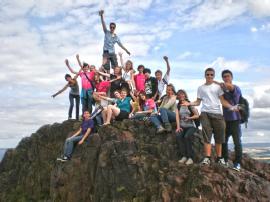
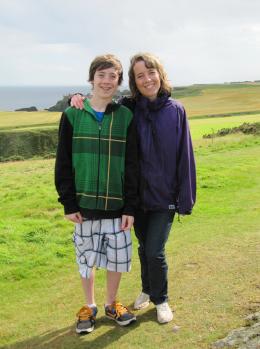
Our son Jesse traveled to Scotland this past summer – he is a  fiddle player with the North Shore Celtic Ensemble, and they  participated in the Aberdeen International Youth Festival for  12 days in July and August.  It was an intense, exciting experience for the  20 teens that went – they all had a fantastic, if  exhausting,  time.

Untitled

Jesse is hard of hearing and wears two Bone Anchored Hearing Aids (BAHAs), so there were a few things to consider when  planning the trip.  For one thing, we made sure the chaperones knew that he would not wake up in case of fire, as he  would not hear the alarm.  Chaperones and other kids in his  flat were told that in the case of a fire, someone would have  to go into his room and wake him, and so Jesse made a point  of not locking his door when he was sleeping.  In fact, even  though he has a vibrating alarm clock, Jesse tends to fall back  to sleep after it wakes him up (teenage boys can really  sleep ), so there were a few occasions when his friends had  to wake him up for breakfast.   

Jesse also made a point of packing his dry aid kit – we have  found that in some places the air is more humid (especially if  we are camping and staying in a tent), and that causes problems with his hearing aids.  Storing the aids in the dry aid kit  each night helps with this.  Jesse also took it in case his hearing aids got wet – it rains a fair bit in Scotland.    

One security guard questioned Jesse about his hearing aids  when going through security at the airport.  Jesse is quite  practiced at talking to people about his hearing aids and hearing loss, and once he explained, they did not hassle him any  further.  I think it helped that Jesse was not at all defensive,  and was quite happy to explain.

There were some situations during the trip where Jesse found  it difficult to hear – he managed OK in the cafeteria, but the  cabarets we attended each night (where different groups performed for each other) were VERY loud.  It was so loud that  no one could hear, though, so Jesse was not alone.   

Jesse also found that each concert venue where they  performed was different, and there were a few places  where he had a hard time hearing the guitar (which is  critical when you are playing as part of an ensemble,  and the guitar sets and maintains the beat).  The musical directors of the group are very respectful and  understanding about Jesse’s hearing loss, but they  don’t necessarily know when Jesse is having a hard  time hearing. It’s his responsibility to let them know,  and then they make any necessary adjustments. When Jesse was new to the group, he was hesitant to  speak up, but as his confidence has grown, he has  become much better at advocating for his listening  needs.  There were two or three times this trip when  he was able to adjust where he stood so he could  btter hear the guitar through the monitor on stage.

Another challenge was the fact that participants  came from all over the world.  Many people spoke  English, but with a whole variety of accents.  This  typically presents a challenge for people with hearing  loss, but Jesse actually found that he could understand most accents quite well.  He did struggle with the flight attendants from Air France, who had very  strong French accents.  He found he used the same  strategies as everyone else – listening carefully, asking the person to repeat, or asking a friend for clarification.

Overall, Jesse’s hearing loss did not really cause many  problems for him on this trip. Preparing ahead of  time definitely helped (talking with chaperones, packing the dry aid kit).  The challenges a person encoun* ters when travelling certainly vary from person to  person, depending on their hearing loss and other  factors, but one key strategy is to be proactive and be  prepared.   Other than that, perhaps the best tool is a  sense of humour – a smile and a laugh certainly help  to smooth things over when an instruction is missed  or something is misheard.

As a parent (and chaperone) it was really good to see  how independent Jesse has become, and how he can  use strategies to compensate for things he might be  missing.  I have chaperoned on several trips over the  years (ensemble trips and school trips) and have  found it to be a wonderful way to help the other kids,  teachers, leaders and parents learn more about  Jesse’s hearing loss.  There are oUen nice, natural  opportunities for people to ask me questions that  they’ve never quite got around to asking.   So, Scotland was great, Jesse now has the ”travel  bug”…and I am confident that his hearing loss will not  hold him back.

Untitled

Posted in Families to Families, Newsletter - Apr 2011 | Comments Off on Hard of Hearing Teenaged Fiddler Travels to Scotland
    Sign Up for Our eNewsletter!
  • H&V Mission (ASL)

  • Guide By Your Side Program (ASL)

  • Diversity, Equity & Inclusion

    We at H&V are looking within ourselves and within the organization to do better in supporting Black lives Matter. Learn more HERE.

  • Upcoming Events

  • Recent Posts

  • Categories