By Joy Santos
Becoming a parent opens your eyes and your heart to a world of adventures and emotions. In my experience thus far, it’s been a rollercoaster of dynamic and often conflicting sentiments!
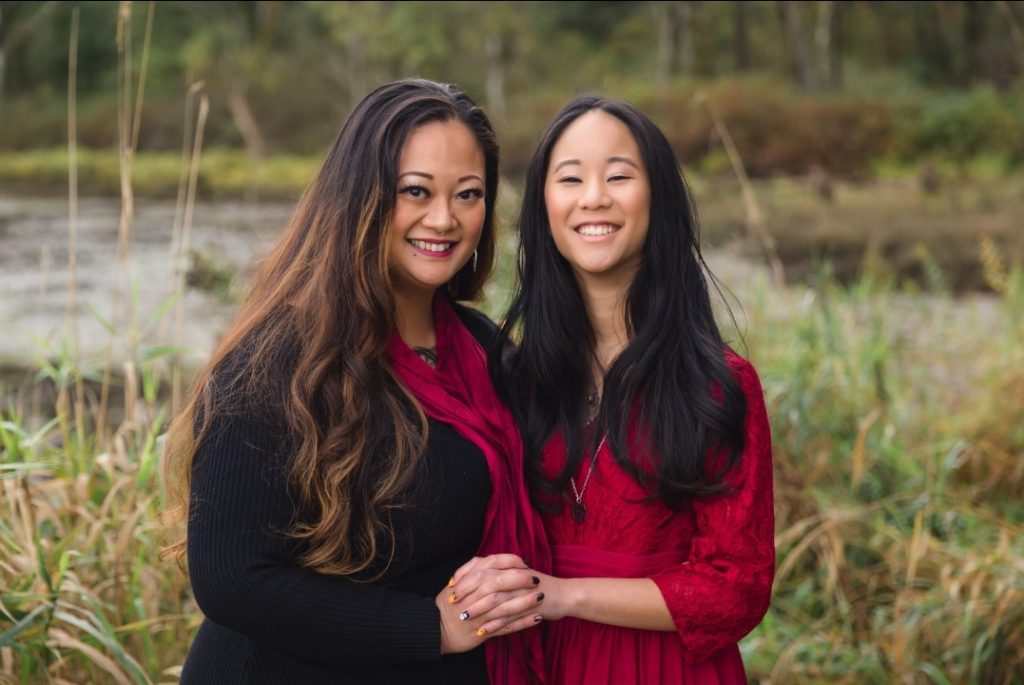
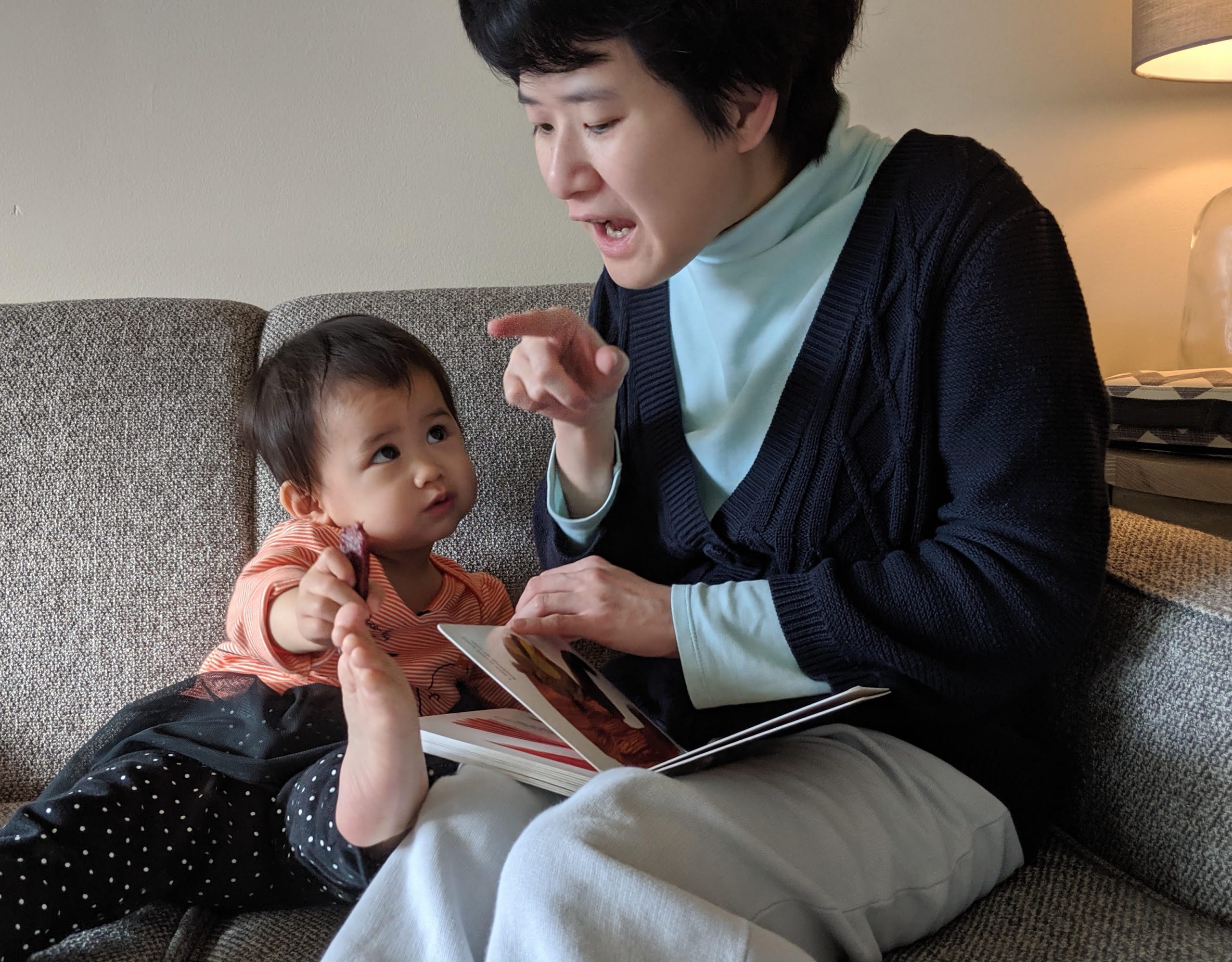
I want to be able to provide my daughter with everything the world has to offer, and also protect her from anything undesirable that might come with some experiences. I want her to be fearless and pounce on any opportunity that comes her way, no holds barred… and I want her to be cautious and take carefully calculated actions. I want her to be independent and confident in leaving the nest to explore, learn from her experiences and live her purpose… and I want to keep her with me forever, hold her hand and guide her through life.
As parents in a time where an overabundance of information, advice and opinions are easily accessible, one common thing rings true for us: we all have our children’s best interests at heart, and we want them to thrive as they grow into responsible adults.
Through my journey as a parent, I’ve come to realize that worrying about our children is part of the package. The worries seem to be more pronounced when our children are not developmentally typical and have different needs. When my daughter was first identified as Deaf, I went through the stages of grief and had many questions. Why did this happen? Why her? This is not real; she is going to get better. I worried about the social and educational aspects of her future. How will she communicate with friends? What if she gets bullied? How will she navigate through her young adult life when the biggest barrier that I can foresee is the lack of accessibility to information and communication? How will the world accommodate my daughter’s Deafness? What adjustments will my daughter have to learn to make in order to succeed?
I pondered how I could parent in a way that ensures that she is on the best path. My personal process to determine this was to first do some inner work. I had to define what my image of a Deaf child was. Are Deaf children capable of succeeding and having “normal” childhoods, or is their Deafness a hindrance that will result in them being sold short? I felt the need to sort this out within myself, in order to know what my role as a parent would entail.
How I managed to define it in the end is that Deaf children are absolutely capable of achieving and utilizing the same opportunities that are provided to hearing children, with the caveat being that they MUST also have the privilege of receiving the same access to information as typical children. Deaf children must not be deprived of language, only be given partial information, or be unable to receive information in real time. Deafness itself is not the hindrance, but rather, the lack of access to opportunities and information is.
If I could narrow it down to ONE essential skill that my Deaf daughter must have confidence and mastery over, it would be self-advocacy. I strongly believe that this is the most important skill she needs, and everything else will naturally follow suit and fall into place.
Based on how I had defined my image of a Deaf child, I strived to raise her to know, experience and affirm that she always deserves nothing less than complete, correct, and immediate access to language and information. I wanted to model this to her from an early age because I felt that this was the best way to build a solid foundation and make self-advocacy a second nature habit, and a part of her identity.
The following are some examples of how I made efforts to make self-advocacy a part of our everyday lives. Naturally, I adapted to provide age-appropriate experiences.
- From a young age, I always encouraged her to order her own food at restaurants. I would start off by informing our server that Teanna is Deaf and will be ordering on her own. I have never encountered any staff who was not accommodating. In the early years, she would do this by either pointing to the item that she wanted on the menu or circling it with the crayons provided with children’s menus. When she learned to read and write, and eventually started ordering her meal from the adult menu, she used pen and paper to communicate.
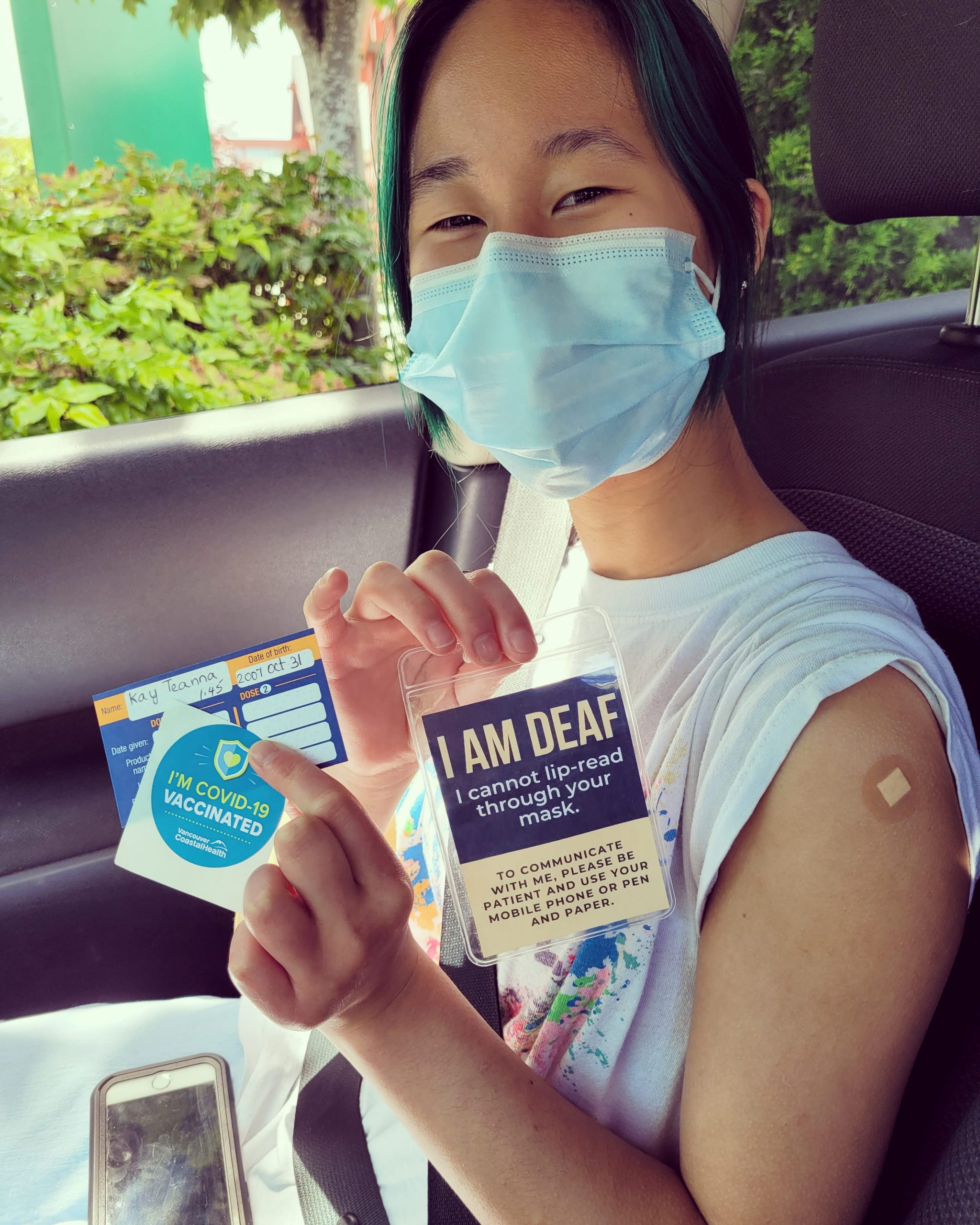
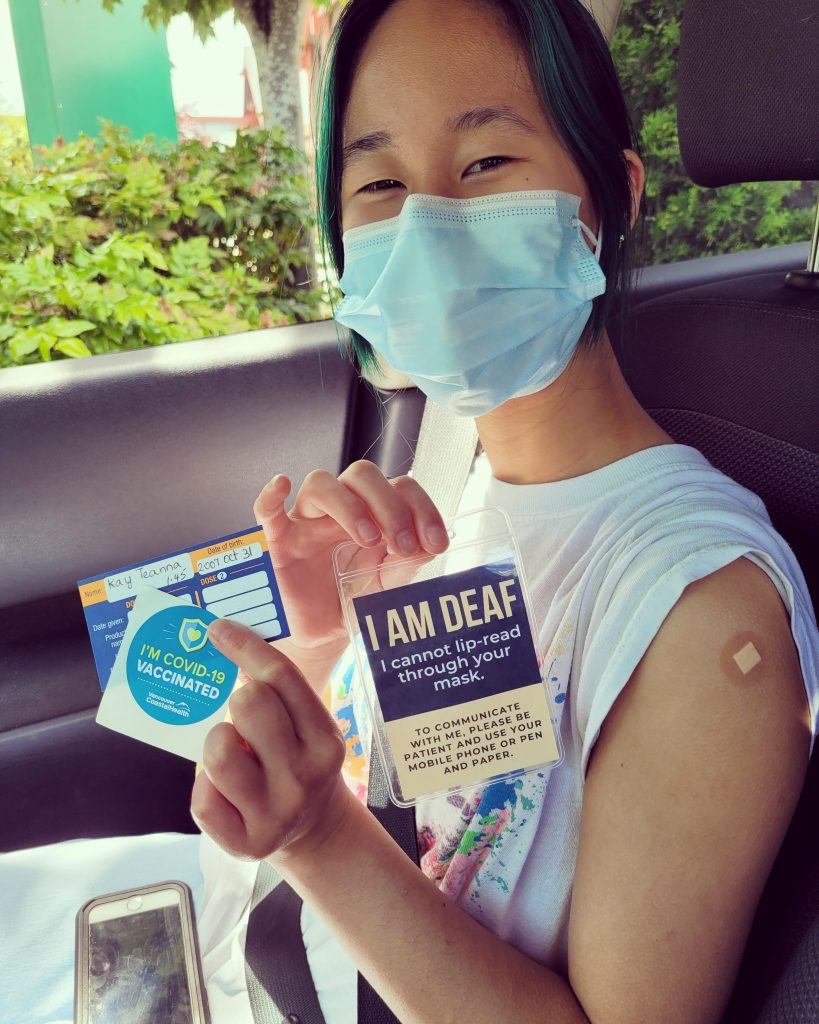
- I always provided her with an interpreter from when she started learning American Sign Language at 2½ years old. Whether it was trips to the Vancouver Aquarium, weddings we attended or visits to attractions during vacations, I always made searching for and booking an interpreter part of my planning process. Now that she is a teen in high school, she has taken it upon herself to be responsible for booking her own interpreters for school meetings. She also asked to use the “remote interpreter on wheels” during her recent COVID vaccination appointment. This allowed her to receive correct information, ask questions, receive answers and have the autonomy to consent to the procedure.
- We have constant communication and discussions about barriers that she encounters in her day to day. When we have any upcoming events or outings, I encourage her to think ahead about any potential barriers she might face. This helps her plan ahead and brainstorm about how to either prevent or manage these obstacles in case they happen.
Parenting this way has had some challenges, of course. I think challenges in any scenario are inevitable. When she was younger, part of me wondered if I should bring her attention to the fact that she is different from typical children her age. She was born with what the world perceives as a disability, and I struggled at times with whether or not I should emphasize this. I felt that it was contradictory to let her know that she will encounter limitations in life, when I hoped to raise her knowing that the world is her oyster. But how can she advocate for herself if she is not aware that there is something to advocate for? She is Deaf, it is a fact.
Do I feel scared whenever she has opportunities to spread her wings? Absolutely. All parents have fears when it comes to their children’s well-being, acceptance, safety and self-esteem. For me, it is those fears that are catalysts to why I guide her this way. I want a guarantee that no matter what she decides to do and where she chooses to go, she will be just fine. That is what I am aiming to set the stage for. Easing my worries and making sure that my heart is strong and brave enough to watch her learn through life is an ongoing work in progress.
A key piece of advice that I can offer as a parent of a Deaf child is to instill in your child the knowledge that they have a voice, their opinions matter, and they always deserve full access to the best quality of life.
Teanna’s Experiences in Self-Advocacy
- When I was younger, around 7 years old, I went to White Spot and I picked my own order for food. I chose a hamburger. The waiter came up and asked my mom first, so I could learn and watch how to order independently. It was my turn. I pointed to the picture of the hamburger and French fries on the menu. The waiter nodded his head, so I knew that he understood. Sometimes, I will circle the picture of what I want on the menu. Before, when I didn’t know how to read yet, and if the menu doesn’t have pictures, my mom will tell me the words and I will circle them to show to the staff.
- I was at the food court in Metrotown with my friend Thomas. I was still young, maybe around 9 years old. We went to A&W and wanted to drink Mountain Dew. My mom always reminds me to have pen and paper when I am out. I wrote down “Can I have 2 Mountain Dew, please” then showed it to the staff. She understood and nodded her head, then I paid for the drinks. Now that I am older and have a phone, I usually just use my phone to type what I need to communicate to hearing people. I also have a card that says “I am Deaf” on it. I show it to people sometimes so they will become aware that they need to communicate with me differently.
- I am part of the Gay-Straight Alliance or GSA in my school. I go to the Deaf School but there are also hearing kids there. The GSA meetings are for Deaf and hearing kids. Everyone is welcome. But it is my responsibility to apply to have an interpreter there. I usually email the interpreter to let her know when there will be a meeting. I am learning from my mom and from my school about how and where I can find services for ASL Interpreters, because maybe in the future I will need it for things like doctor appointments or job interviews.
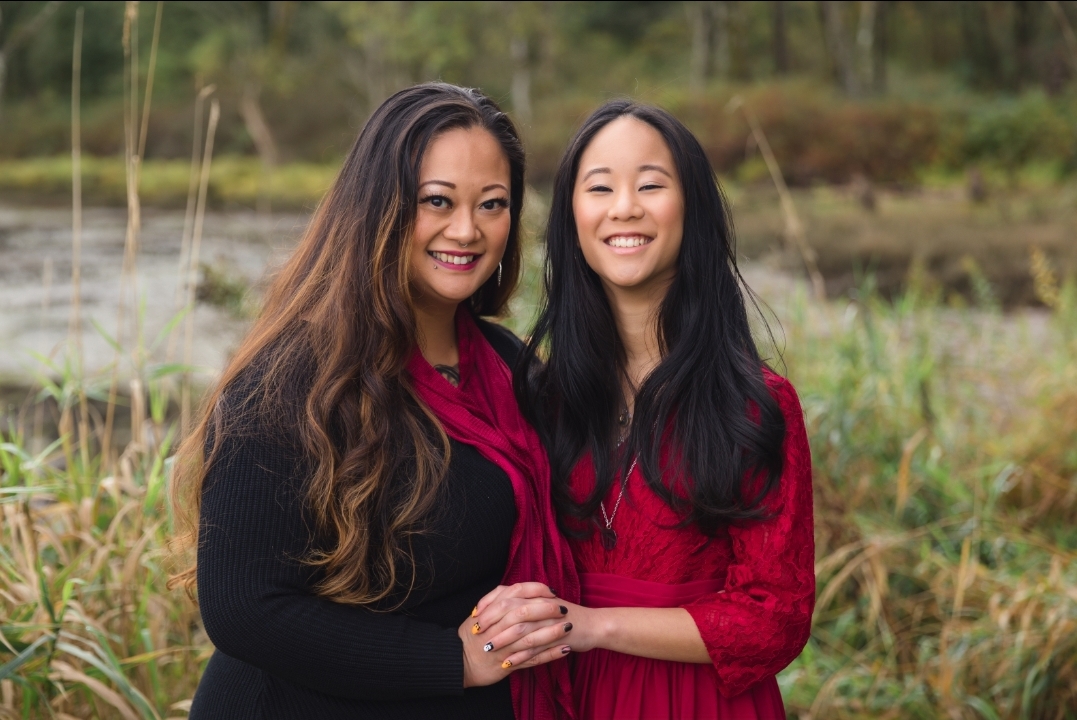
Joy Santos is a licensed Early Childhood Educator who has been working in childcare settings with children aged 0-5 since 2009. Her daughter, Teanna, is currently 13 years old. Teanna was born with bilateral sensorineural hearing loss in the severe-profound range. Teanna identifies as culturally Deaf. Her first language is American Sign Language, and she uses a cochlear implant in one ear. Together, Joy and Teanna love to travel, participate in outdoor activities, try different cuisines, help animals, and binge-watch streamed movies and series. Joy is a board member with BC Hands & Voices, and a Parent Guide with Guide By Your Side.