
Based on a presentation by Natalia Rohatin-Martin, Assistant Professor, MacEwan University in February 2022.
“I feel bad for students who have to go through this every day… I’m exhausted.”
– A university student after watching a captioned video with no sound for the first time.
This powerful reflection highlights an often invisible challenge our deaf and hard of hearing (DHH) children face daily: listening fatigue. Dr. Natalia Rohatin-Martin, Assistant Professor at MacEwan University, shares research and lived experiences to shed light on this complex and misunderstood issue.
What is Listening Fatigue?
Fatigue isn’t just feeling tired—it’s a deeper, ongoing sense of exhaustion that isn’t solved with sleep. For dhh students, listening and communication require constant cognitive, visual, and social-emotional effort. Imagine trying to track conversations, visual cues, captions, and multiple speakers all at once—for six hours a day.
Unlike typical tiredness, listening fatigue affects concentration, memory, motivation, and even physical health. It can leave children too drained to do homework, socialize, or participate in activities they normally enjoy.
The 3 Types of Fatigue:
- Cognitive Fatigue
- Struggles with focus, zoning out, headaches, or blurry vision.
- May result in missing information or needing frequent repetition.
- Physical Fatigue
- Eye strain, muscle tension (even from signing), yawning, or general low energy.
- Affects participation in sports, chores, or hobbies.
- Social-Emotional Fatigue
- Feelings of sadness, frustration, isolation, or anxiety.
- May avoid group work or feel hesitant to advocate for themselves.
Common Signs Parents Might Notice:
-
- Your child comes home quiet or irritable.
- They want to nap or withdraw from activities.
- They complain of headaches or eye discomfort.
- They seem unmotivated to socialize or complete schoolwork.
How Can We Support Our Kids?
- Encourage Self-Advocacy
Help your child understand their right to communication access. Practice asking for repetition, requesting that peers face them, or managing technology like FM systems. - Teach Recovery Strategies
Create quiet downtime after school. Prioritize breaks and rest to help your child recharge. - Collaborate with Educators
Share insights about your child’s needs and signs of fatigue. Advocate for flexible seating, reduced background noise, or access to transcripts and captioning. - Normalize the Experience
Let your child know fatigue is valid and real. Build empathy among classmates and teachers whenever possible.
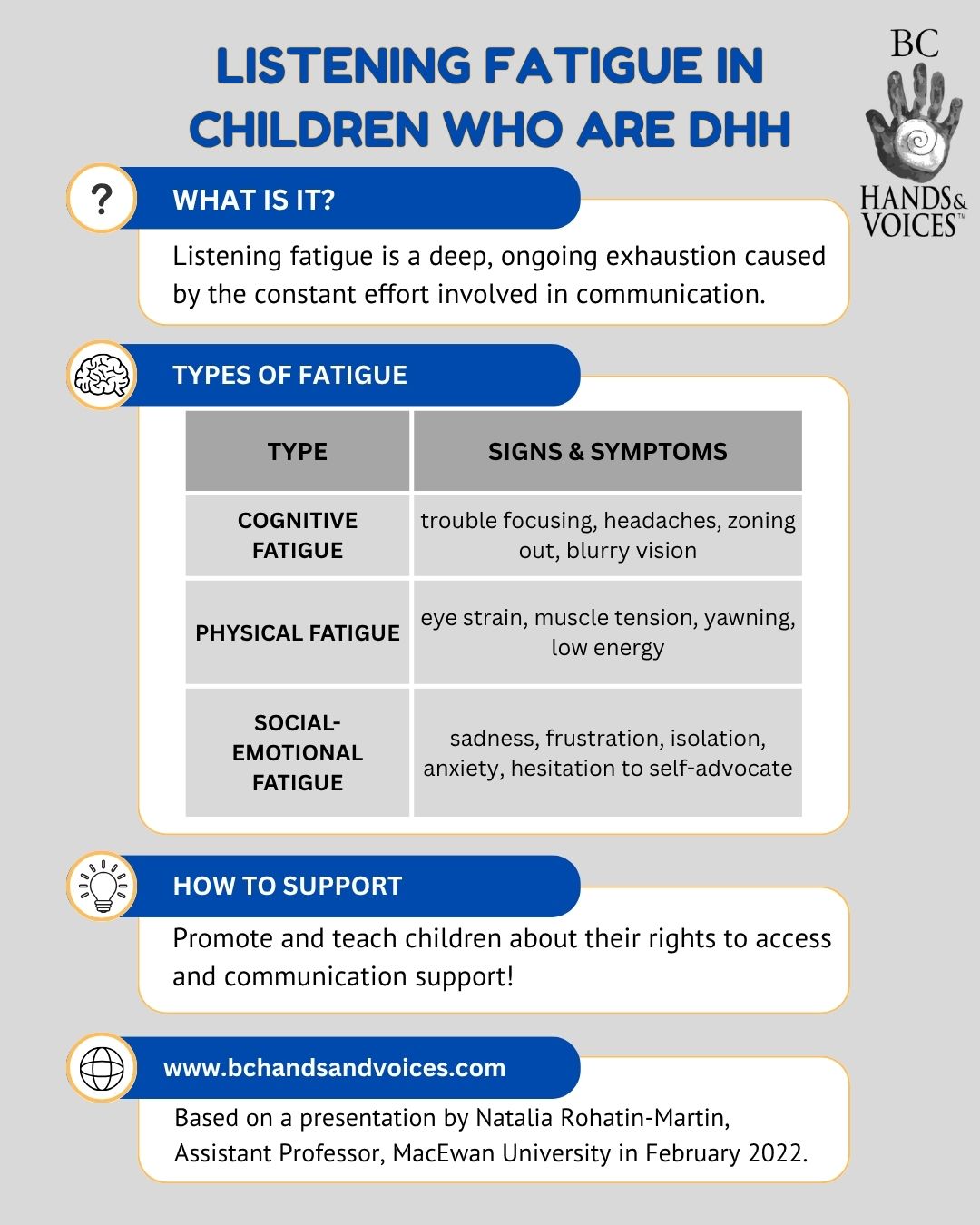
Natalia emphasizes that promoting independence and teaching children about their rights to access and communication support will help them manage fatigue more effectively. Her informative video is a helpful resource for parents, educators, and anyone supporting a child who is dhh. It offers not only valuable insights but practical strategies to reduce fatigue and foster a more inclusive learning environment.
? Watch the full video presentation here: https://www.youtube.com/watch?v=UOn8fJ_E2Lc
