Blossoming in Kindergarten

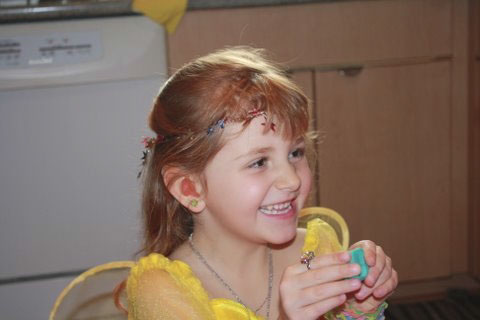
CaitlinThree years ago when our daughter Caitlin was 18 months old, she barely spoke ten words. We were concerned about her development so we took her for a hearing test (no screening was available when she was born). It turned out she had permanent mild to moderate sensorineural hearing loss. She was fitted with hearing aids within two weeks and then began intervention a month later. In my sadness, one big concern was whether she would be able to enter kindergarten in our neighborhood school with the young children she already knew. But, three years later, after consistent hearing aid use and weekly intervention, she was ready to go to our local school with her friends.

In the spring before Caitlin turned five, both her preschool teacher and speech and language pathologist thought she was ready to go to Kindergarten that September, but I was nervous about how it would all go. She is a late November baby, was still quite shy/quiet in group situations and she had just managed to learn her capital letters after hours of practice. To make matters worse, we had watched Caitlin struggle through the years with new concepts like learning her colours and the names of her extended family members. I was so worried that the new concepts in Kindergarten would take her a long time to master.

What put our minds at ease was we knew she would receive tons of support. Back in the spring, Caitlin’s preschool teacher (coincidentally a mother of a hard of hearing teenager) referred us to a hearing resource teacher in our school district. We had a meeting in May and started planning her IEP (individualized education plan) with the professionals who would be working with Caitlin. The hearing resource teacher also arranged all the paperwork designating Caitlin such that she would receive as much support as possible. This designation led Caitlin to share a full time specialized education assistant (SEA) with another boy in her kindergarten class. In September, I attended an IEP meeting with the SEA, the classroom teacher and the hearing resource teacher. We spent an hour talking about goals for Caitlin and set three goals connected to her speech, listening and independence with her FM and speaker system. We were told she would be the only child with a hearing loss in her school, which was worrisome. But she spoke well and was very social in small group situations, so we hoped for the best as she embarked into Kindergarten that fall.

Caitlin’s classroom was (happily) small and carpeted, creating an easier listening environment. In addition, the room is bright, colourful and full of books and toys. Overall, the classroom is stimulating but there are predictable routines. The hearing resource teacher works with Caitlin for an hour each week for a one on one session on the IEP goals we set. Also, the classroom teacher uses a sound field system to amplify her voice for all students (so she is very used to wearing a microphone). Caitlin’s FM system patches in reasonably well. The hearing resource teacher even spoke to our hearing aid company and arranged for a dynamic sound field system that matches even better with Caitlin’s FM – so Caitlin is receiving excellent sound quality.

With all of these accommodations and supports, Caitlin has done better than I ever expected. She loves learning her letters and quickly picked up her lower case letters. She is very independent and enjoys picking out original and fashion forward outfits in the morning before school and putting on and connecting her FM when she arrives at school. She looks forward to “special helper day” when she gets to bring something from home in a box writing the first letter of each object on the outside. In September had to help her; by November she chose three items (two frogs and a bird) independently. I looked on the front of the box and she had written “FFB” all by herself – wow, what progress! Caitlin started the year as a very quiet child and did not share her thoughts, but the teacher now tells me that she offers answers during circle time. Caitlin loves making play dates and plays well with others.

The best moment was in December at the Christmas concert. Each class from Kindergarten to Grade Four sang two songs. When I watched our older son in that concert last year, I couldn’t even imagine Caitlin standing up there. If she could be dragged up there, I imagined her standing, head down and silent. Instead, to our delight, Caitlin confidently walked onto the risers, and faced forward, head held high. She sang the songs with joy on her face. She didn’t just sing – she shouted and I sat in my chair and smiled from ear to ear.

Our little girl has blossomed into a fully communicating, happy student who is succeeding in school. We have a long way to go yet (she needs to learn to read and understand math and of course so much more) but I definitely feel much more confident. The support to make sure that the many small things are in place that all add up to helping her succeed has been amazing, and Caitlin has thrived.

Read this article in PUNJABI
Read this article in TRADITIONAL CHINESE
Read this article in SIMPLIFIED CHINESE

Posted in Newsletter - Apr 2011, Newsletters | Comments Off on Blossoming in Kindergarten

Family Fun at Crash Crawly’s!!

Come join us at Crash Crawly’s on Sunday March 13th from 10am to 1pm!  It will be a wonderful opportunity to meet other families with children of all ages who are deaf or hard of hearing.

This event is jointly hosted by BC Hands & Voices, CHHA-BC Parents’ Branch, and Family Network for Deaf Children.

Crash Crawlys invitation & registration

Posted in Events | Comments Off on Family Fun at Crash Crawly’s!!

Ho Ho Huh? Tips for Surviving the Holidays

January 2011
Contributed by Lorna Irwin, Idaho H&V
You’ve done whatever you need to do to give your deaf or hard of hearing child access to communication at  home through amplification, creating a good listening environment and/or employing some form of visual communication.Suddenly the holidays arrive; the extended family gathers, the noise level goes up, and it’s enough to confuse any child, let alone one who can’t hear everything that’s going on. How can you reduce the stress of family events, and even turn them into something meaningful and memorable? We’ve gathered the following tips from Idaho Hands & Voices families and other sources.
Posted in Newsletter - Jan 2011, Uncategorized | Tagged , , , , , | Comments Off on Ho Ho Huh? Tips for Surviving the Holidays

Fall Parent Workshop: Tips for Raising Happy, Confident Kids

January 2011

By Teresa Kazemir

BC Hands & Voices was thrilled to have Dr. Janet Jamieson present at our Fall Parent Workshop. She started things off with an informative and encouraging talk about self-esteem in children with hearing loss.
This was followed by a panel of confident, inspiring teens and young adults. They talked about their personal experiences growing up, and some interesting situations they have encountered. After a lunch break and a chance to socialize with other families, it was time for a panel of “veteran” parents, who shared their stories and some practical pointers for raising happy confident kids. Here are a few key ideas and tips from Dr.  Jamieson’s presentation:
Posted in Newsletter - Jan 2011 | Tagged , , , , , , | Comments Off on Fall Parent Workshop: Tips for Raising Happy, Confident Kids

A California Adventure with Benefits

January 2011

By Anja RosenkeCalifornia Adventure

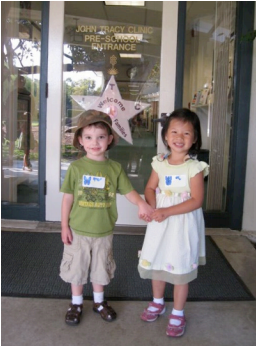
“You’re going to California for a whole month?!” We smiled at the looks of disbelief that accompanied that question. Yes indeed, we had been accepted to the last of the three international summer sessions for 2010 at the John Tracy Clinic in Los Angeles, California. An adventure awaited. As Louise Tracy herself said, we, as parents of children who are deaf or hard of hearing, are each pioneers embarking on a unique adventure in teaching our children. This particular adventure would take us over a thousand miles south from our home in Vancouver, BC. And that was just the beginning.

Continue reading 

Posted in Families to Families, Newsletter - Jan 2011 | Tagged , , , , , , , , | Comments Off on A California Adventure with Benefits

H&V 2010 National Leadership Conference

I was honoured to be selected to attend the annual Hands & Voices National Leadership Conference in Minneapolis, Minnesota this past summer. It really gave me a much broader understanding of what Hands & Voices does, and how BC Hands & Voices is part of a much larger cause. There were some excellent speakers and some great pieces of information I’d like to share.

This is a great piece of advice for new parents; when someone offers you something (ie: a service, an opportunity etc.) TAKE IT! Parents of babies newly diagnosed with hearing loss are often overwhelmed with many different things, and they may not be ready to deal with the hearing loss. It is our job as Parent Guides to make sure that they understand the importance of finding supports when they are ready, even though right now they may feel they don’t need it. I heard over & over again from parents, that one thing they really regretted was not connecting with other families of D/HH kids sooner. They realized the value of such networking & relationships later, and wished they had taken the advice when it was offered.

Another point that stood out to me was that of judgements & expectations of our D/HH kids. It was, understandably, a very sensitive topic with a lot of parents. There was much discussion around labels & perception. Because our kids are D/HH and they struggle with language & communication, they are often perceived as having lower cognition, & therefore the expectations for that child are lower as well. It was particularly disturbing to hear that this perception was sometimes coming from teachers, librarians & other support people in the education system. It is so important to reinforce that our kids struggle with speech & language, and they may not be able to express themselves in the same way as their hearing peers. And we should have high expectations for them, the same expectations that we have for all hearing kids.

Parents are often expected to make difficult decisions surrounding hearing loss early on, when they themselves really don’t know what the outcome will be, or even if it is the right decision. This is particularly hard when the child is a baby, and parents have little information or experience. We all know our children best, better than even the professionals, so trust yourself to make those decisions for your child…the decision must FEEL right. What works for your child is what makes the choice right!

Posted in Newsletter - Sept 2010 | Comments Off on H&V 2010 National Leadership Conference

Thank You!

We would like to thank the following organizations for their generous donations.

The Gwyn Morgan & Patricia Trottier Foundation

BC Children’s Hospital Family Support Groups/Networks Funding Committee

With the generous donation from the Gwyn Morgan & Patricia Trottier Foundation, BC H&V was able to send one of our members Paula Jensen to the H&V National Leadership Conference in July. Together with the grant from BC Children’s Hospital Family Support Groups, we will continue to provide our support to families with deaf/ hard of hearing children through workshops, family socials, etc.
Let us know how we can support you. Drop us a line at info@bchandsandvoices.com. Of course, we would like to have your help too. Send us a story, questions, news, your thoughts. Or donation!

BC Hands and Voices is a registered charity (Charity Registration Number: 83838-4428 RR0001). To make a donation, please issue a cheque to BC Hands and Voices. A tax deduction receipt will be issued for any donation of $25 or above.

Posted in Fundrasing, Newsletter - Sept 2010 | Comments Off on Thank You!

Spring Picnic at Confederation Park

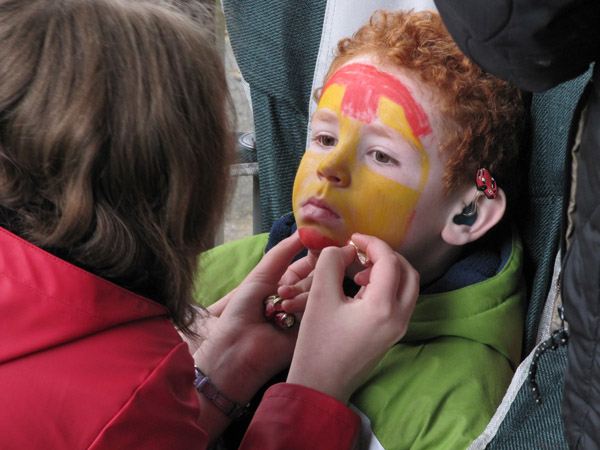
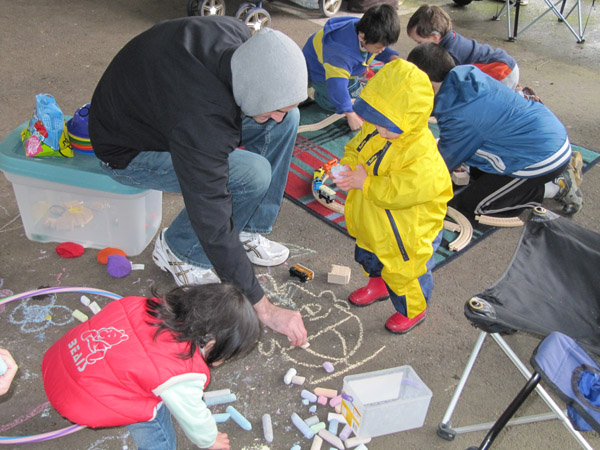
We had a great turn out! 69 people (families with children who are deaf or hard of hearing) came out despite the rain. We chatted, enjoyed our potluck, and the kids had fun having their faces painted, playing games, drawing with chalk, etc.

Posted in Events, Newsletter - Sept 2010 | Comments Off on Spring Picnic at Confederation Park

What Parents Need to Know About CI “Soft Failure”

by Leeanne Seaver, Hands & Voices ©2010, with contributions from experts at Advanced Bionics, Cochlear Americas, and the University of Colorado Hospital. ©2010 Hands & Voices Communicator, Summer 2010, Reprinted with Permission

The stories we hear the most are inspiring: the deaf girl who won the school spelling bee thanks, in part, to her cochlear implant (CI) that enabled her to participate for the first time in this thoroughly “hearing” event; the Princeton-educated attorney who loves both her CI-friendly iPod and her Deaf cultural lifestyle. There’s no question that cochlear implant technology has changed the landscape of the deaf world and opened up new possibilities for many, many users. But not for all users, all the time. When things aren’t going well, parents often worry that their child is the problem—maybe s/he is the kind of kid the audiologist was referring to when she said “not every kid will be successful with a cochlear implant.” How long does the frustration and anxiety over little-to-no progress go on before it’s determined whether the CI device itself is the problem? What are the red-flags for device failure?

Whether you’re the parent of a child with a cochlear implant or considering this technology for your son or daughter, you need to consider the fallibility of this technology. The good news: in general, it’s rare. The bad news: a CI malfunction known as “soft failure” is difficult to identify, and it can be a long, frustrating process to discover it. If you’ve already lost a lot of time before even beginning to explore this possibility, your kid could be at real risk for language deficits and related problems. Arming yourself with knowledge will help you make informed choices and take prompt action if you’re ever worried about this issue for your child. Hands & Voices (H&V) has invited two major cochlear implant manufacturers and an independent audiologist who works at a large, metropolitan university hospital with many CI patients to share their insights and expertise to help get you started.

H&V: What is “soft failure”? What causes it? How often does it occur? Is there such a thing as “hard failure”?

SHANNON BURNS, AuD, CCC-A: A cochlear implant soft failure is an uncommon occurrence in which a device malfunction is suspected but cannot be proven using currently available methods of assessment. A cochlear implant hard failure may be characterized as more of a sudden loss of function, such as no communication between the internal and external devices. This may be proven with an assessment (integrity test) by the manufacturer of the function/status of the internal device. The Consensus Statement from 10th Symposium on Cochlear Implantation in Children assessed that soft failure:

  • Is an uncommon occurrence
  • Is a working diagnosis. (Only confirmed by removal, examination and identification of failure mode)
  • Diagnosis begins with awareness of common presentations. (Declining performance, aversive symptoms or intermittent function)
  • Diagnosis can only be made with complete otological examination, CT scan, expert re- programming, exchange of all external hardware, and integrity testing by the manufacturer.

COCHLEAR AMERICAS: A “soft failure” is a term used by the cochlear implant industry to describe a situation where a patient’s hearing performance has noticeably decreased but the implant integrity testing shows that the implant is functioning as normal. In other words, the implant testing does not show a problem with the internal device, but the patient is not hearing as well as they used to.

There is a wide range of patient clinical situations where a “soft failure” occurs. Therefore we are not able to draw any specific conclusions about what causes “soft failures”. Indeed, quite often a change in a patient’s hearing performance will not be device related, but instead will be related to the patient’s general health or medication.

“Soft failures” do occur, and in one recent study it was reported that 2% of the implant recipients had their implant replaced due to a soft failure (Data was collected from two major cochlear implant centers in the US, and devices were represented from each manufacturer – Cullen et al. 2008). This report does show that the Nucleus Cochlear Implants had a significantly lower incidence of soft failures than the other manufacturers.

A “hard failure” a.k.a “a failed device” is much easier to identify. A hard failure will be identified by a combination of a noticeable drop in a patient’s hearing performance, and the implant integrity testing showing the device as malfunctioning (or not operating as designed).

ADVANCED BIONICS: Cochlear implant “soft failure” is an uncommon occurrence in which a device malfunction is suspected but cannot be confirmed using currently available tools to test the internal device once implanted (often referred to as “integrity testing”). A soft failure may be suspected when there is a lack of or decline in hearing performance, perceptions such as a popping sound or intermittent hearing with the cochlear implant. Re-implantation of another device with subsequent alleviation of symptoms strongly supports the diagnosis of a soft failure but cannot conclusively confirm a device malfunction. A suspected soft failure is confirmed when the device is explanted and a failure mode is identified upon further evaluation and inspection.

A “hard” failure is typically defined when a device malfunction is suspected and indeed confirmed with the available assessment tools (the “integrity” testing).

Testing of the device can be conducted either in-situ (e.g. integrity testing in the ear) or upon return of the explanted device to the manufacturer. Once the device is explanted and returned to the manufacturer, a wide range of tests can be performed to assess the functionality of the device. If none of these tests fail, but the patient is performing better with the new device than with the explanted, then the conclusion is that the explanted device had a “soft failure”. Because the term “soft failure” has come to have a variety of meanings, Advanced Bionics does not actually use this term. Instead, Advanced Bionics uses the following classification scheme based on the testing that was performed on the device:

  • Confirmed Device Failure – The explanted device failed a test when it was returned to Advanced Bionics for failure analysis.
  • Clinical Failure of Unknown Origin – The device failed an integrity test when it was tested in-situ; however it has yet to fail a test upon return to the manufacturer. In some cases these devices have not yet been explanted and returned to Advanced Bionics.
  • Clinically Device Tested OK – Other Reason for Explant – These are cases where the device did not fail any clinical integrity test however the device was explanted and upon return to Advanced Bionics, the device passed all tests. “Soft Failures” would fall into this category. Included in this category is the case where 1.) a patient perceived there was an issue with the device and 2.) integrity testing did not indicate a failure and 3.) upon explant the device was returned and passed all testing and 4.) the patient performed better with the new device than the explanted. The percentage of explanted devices that fall into this category is quite small (less than 2%).
  • Medical Explant – Explants for non-device related reasons. These include infections, extrusions, electrode migrations, etc..

H&V: How can families recognize the signs or symptoms of a soft failure?

SHANNON BURNS, AuD, CCC-A: The suspicion of a soft failure begins with the awareness of common presentations including declining performance (decrease in speech perception scores or functional thresholds) and/or aversive symptoms (non-auditory sensations) such as popping or shocking sensation or intermittent function. The working diagnosis of a soft failure is arrived at after painstaking evaluations by the cochlear implant team, manufacturer and patient. A soft failure can only be confirmed by removal, examination of the suspect device, and identification of a failure mechanism.

COCHLEAR AMERICAS: A family would not necessarily recognize the signs or symptoms of a soft failure (as defined). Rather they should focus on the recipient’s hearing. If they notice significant changes in hearing performance they should contact the family member’s audiologist for a consultation. The audiologist would then determine whether programming changes are appropriate or if an integrity test should be performed on the internal device.

ADVANCED BIONICS: For older children who can tell parents about what they are (or are not) hearing, parents should watch for any changes in their child’s ability to hear, any reports of aversive sounds such as pops or changes in sound quality including static or buzzing, and any reports of discomfort, pain or tingling around the head or face.

For young children who cannot report what they hear, parents should watch for unwillingness to wear the device, a change in behaviors (more aggressive, frustrated), a change in attentiveness, and/or a regression or lack of expected development of communication skills.

H&V: What should a family do if they suspect there is a soft failure with their child’s CI?

SHANNON BURNS, AuD, CCC-A: Generally speaking, if there is any significant change in hearing ability, sound quality, or the presence of non-auditory stimulation the family should contact their cochlear implant audiologist immediately for further troubleshooting and assessment. The clinical specialist from the cochlear implant manufacturer may be called upon to perform an integrity test of the internal device, although this test is often “within normal limits” in case of soft failures.

They should have an excellent team of professionals that must including audiologist, speech therapist, physician, parents and educators who are closely connected and all collecting data on progress and benefit over time. This team together discusses progress and can explore the possibility of a “soft” failure as necessary. If these things aren’t in place from the time of implantation (or before) a soft failure may not be identified in a timely manner.

COCHLEAR AMERICAS: They should contact the child’s audiologist for an appointment.

ADVANCED BIONICS: If families note any of the symptoms of soft failure, or if they have any concerns about their child’s hearing performance for that matter, they should check all the external equipment to be certain it is functioning properly and immediately contact the cochlear implant center.

H&V: Are some kids at greater risk for soft failure?

SHANNON BURNS, AuD, CCC-A: No. However, kids who do not have a good team in place can have two problems. First they could have internal device issues or simply processor programming issues that could be overlooked because no one is actively managing/monitoring their hearing. Second, they could be thought to have a “soft” failure when the reason for lack of progress is actually lack of appropriate intervention and follow through.

COCHLEAR AMERICAS: There is no clinical evidence that some kids have a greater risk for soft failure than others. There seems to be more importance around which cochlear implant manufacturer produced the device (as presented in the paper by Cullen et al).

ADVANCED BIONICS: In 2006, Advanced Bionics identified internal moisture problems in a significant number of implants manufactured with a component (called a feedthrough) built by one supplier (“Supplier B”) whereas no such problems occurred in components from another supplier (“Supplier A”). Accordingly, recipients of suspected devices and their cochlear implant teams were notified to monitor for any suspected changes in performance or sound quality. Since that time, AB has manufactured HiRes 90K devices with feedthroughs provided only by Supplier A which demonstrated very high reliability (99.6% 2 year CSR).

While the internal reliability of cochlear implants today is very high, over 99%, parents of children with cochlear implants regardless of type should monitor their child’s performance and discuss any concerns with their cochlear implant surgeon and audiologist.

H&V: What is the recommended protocol when there is a soft failure?

SHANNON BURNS, AuD, CCC-A: Otological examination, CT scan, close monitoring of performance over time, expert re-programming and hearing testing, exchange of all external hardware, and integrity testing by the manufacturer.

COCHLEAR AMERICAS: Any change in hearing performance must be managed by the patient’s audiologist based on the clinical symptoms. This may range from monitoring the patient to requesting an integrity test by the manufacturer. Hearing performance data and other clinical data with the cochlear implant should be continuously monitored, so that if a concern arises, there is baseline data to compare to. These measures, along with information about any medical concerns, can help the implant team and manufacturer make the best recommendation regarding whether or not to replace the device.

ADVANCED BIONICS: The appropriate management option for a child with a suspected soft failure is determined by the cochlear implant team (CI surgeon and audiologist and therapists) and the parents/ caregivers with input from other professionals actively involved with the implant user’s health care. Typically, the cochlear implant team first rules out the possibility of external equipment malfunction and may make programming adjustments and then request a comprehensive integrity test from the manufacturer. A consensus statement from a panel of cochlear implant experts outlined management options as follows: 1) prolonged observation if the device continues to provide substantial benefit and symptoms are tolerable; 2) removal and re-implantation; or 3) in rare cases, implantation of the opposite ear (if not also implanted) when hearing performance is the main concern.

H&V: If a child has to be re-implanted because of soft failure, does his/her family have to pay for the second surgery?

SHANNON BURNS, AuD, CCC-A: Generally the cochlear implant manufacturers support the decision of the surgeon and audiologist to explant/remove a device and will cover expenses not covered by insurance if the device is under warranty. The warranty for the internal devices is 10 years.

COCHLEAR AMERICAS: This does depend on whether the implant was still under warranty, and whether or not it was determined to be a failed device. It is unusual for a family to have to pay for revision surgery

ADVANCED BIONICS: Cochlear implants have a warranty and the center and family should work with the manufacturer on specific cases. Specifically, for Advanced Bionics devices, we make no distinction between “soft” and “hard” failures; rather, we follow the recommendations of the cochlear implant team and cases of suspected soft failure leading to explantation are therefore covered under the terms of the warranty.

H&V: If there has been a soft failure, are there any risks to the child’s brain or internal processes?

SHANNON BURNS, AuD, CCC-A: Generally, no.

COCHLEAR AMERICAS: A soft failure does not add any risks to the child’s brain or internal processes. The risk of surgery to replace the implant is not significantly riskier than the child’s first cochlear implant surgery.

ADVANCED BIONICS: We are aware of no studies or cases showing such risk.

H&V: How long does the CI’s internal device usually last? Should families plan on the need to re-implant their child due to the anticipated “lifespan” of the internal device?

SHANNON BURNS, AuD, CCC-A: The implant is designed to last a life time, but because they have not been in existence for a “life time”, there is no way to know how long they will really last. Also, technology changes/improvements lead people to electively replace internal devices when the benefits are substantial. For instance, some people who received single channel implants from the late 70s or early 80s are having theirs replaced. I would expect that most pediatric patients will have their implant replaced at least once in their life time.

COCHLEAR AMERICAS: Nucleus devices are designed for a lifetime. Cochlear’s implant reliability is the best in the industry and we do not think families should be required to plan on re-implanting their child every few years. For example, for our earliest generation products after 23 years there is a 93% cumulative survival.

ADVANCED BIONICS: The expectation for any cochlear implant is that it should have a minimal chance of failing within a 10 year period. This not to say that there is a zero chance of failing within 10 years, but rather that the probability is acceptably low (well less than 5%). Therefore, families should not have to plan on a re-implantation within the 10 year period. In fact, the reliability of Advanced Bionics current device is such that families have a good chance of not seeing a failure at the 15 or even 20 year mark.

Even so, our life spans are now 70 and 80 years, so the expectation should be that children implanted at two years old will have several cochlear implants over their lifetime. AB builds our implants with the technical capacity or headroom to be upgraded through software programming that requires no surgery. This gives children being implanted today as much access as possible to the breakthroughs of tomorrow with the hope that the device will function much beyond its warranty period. Nevertheless, while the advances of decades to come cannot be predicted today, it may be that some advances are so great they may warrant re-implantation to upgrade hearing performance.

H&V: What else should families know about this topic?

SHANNON BURNS, AuD, CCC-A: It may be important for families to be aware of the potential for electrostatic discharge (ESD) to compromise internal device function.

COCHLEAR AMERICAS: Soft failures are rare. Small fluctuations in a child’s hearing performance are normal. Significant changes in hearing performance may not be normal. Keep good records of your child’s hearing performance, pay attention to significant changes and see your child’s audiologist at yearly intervals or more frequently if required by the condition of the patient.

ADVANCED BIONICS: We are committed to making reliability of our product- both internal and external components- our number one goal. Our patients remain foremost as we demonstrate the importance of quality in all of our daily activities. We continue to invest substantial resources to improve the quality in all that we do.

H&V: What if everything seems to be going ok but no you’re worried?

H&V: Chances are everything is ok! Just be sure your cochlear implant audiologist does a “hearing performance test” with the implant to establish a baseline from which you can measure progress, lack of progress or digression. This is extremely important for every CI user so you know when something is going wrong, and can promptly identify a soft failure in the unlikely event that your child may have one.

Whether it’s a cochlear implant supporting listening and spoken English, or Cued Speech, S.E.E., or American Sign Language—whatever mode or method you’re using, make sure your child is developing language; expect him or her to make progress and achieve fluency that’s age-appropriate. Do all you can and should to ensure that you have the knowledge you need to help your child reach his/her fullest potential.

Posted in Advocacy, Newsletter - Sept 2010, Technology | Tagged | 9 Comments

Fall Parent Workshop

Tips for Raising Happy Confident Kids

Saturday Oct. 16th 10:00 am to 3:00 pm at the Children’s Hearing & Speech Centre of BC (3575 Kaslo St, Vancouver)

We’re thrilled to have Dr. Janet Jamieson as our guest speaker.  Dr. Jamieson is an Associate Professor & Director of the Program in Education for the Deaf and Hard of Hearing at the University of British Columbia.  She will introduce the topic of self-esteem in children with hearing loss, and then facilitate a panel of deaf and hard of hearing teenagers.  After lunch, she will facilitate a second panel of “veteran” parents of children with hearing loss.  There will also be times during the day when families can chat informally and share information with one another.

Registration Details

Download Poster

Posted in Events, Families to Families, Newsletter - Sept 2010 | 1 Comment
    Sign Up for Our eNewsletter!
  • H&V Mission (ASL)

  • Guide By Your Side Program (ASL)

  • Diversity, Equity & Inclusion

    We at H&V are looking within ourselves and within the organization to do better in supporting Black lives Matter. Learn more HERE.

  • Upcoming Events

  • Recent Posts

  • Categories