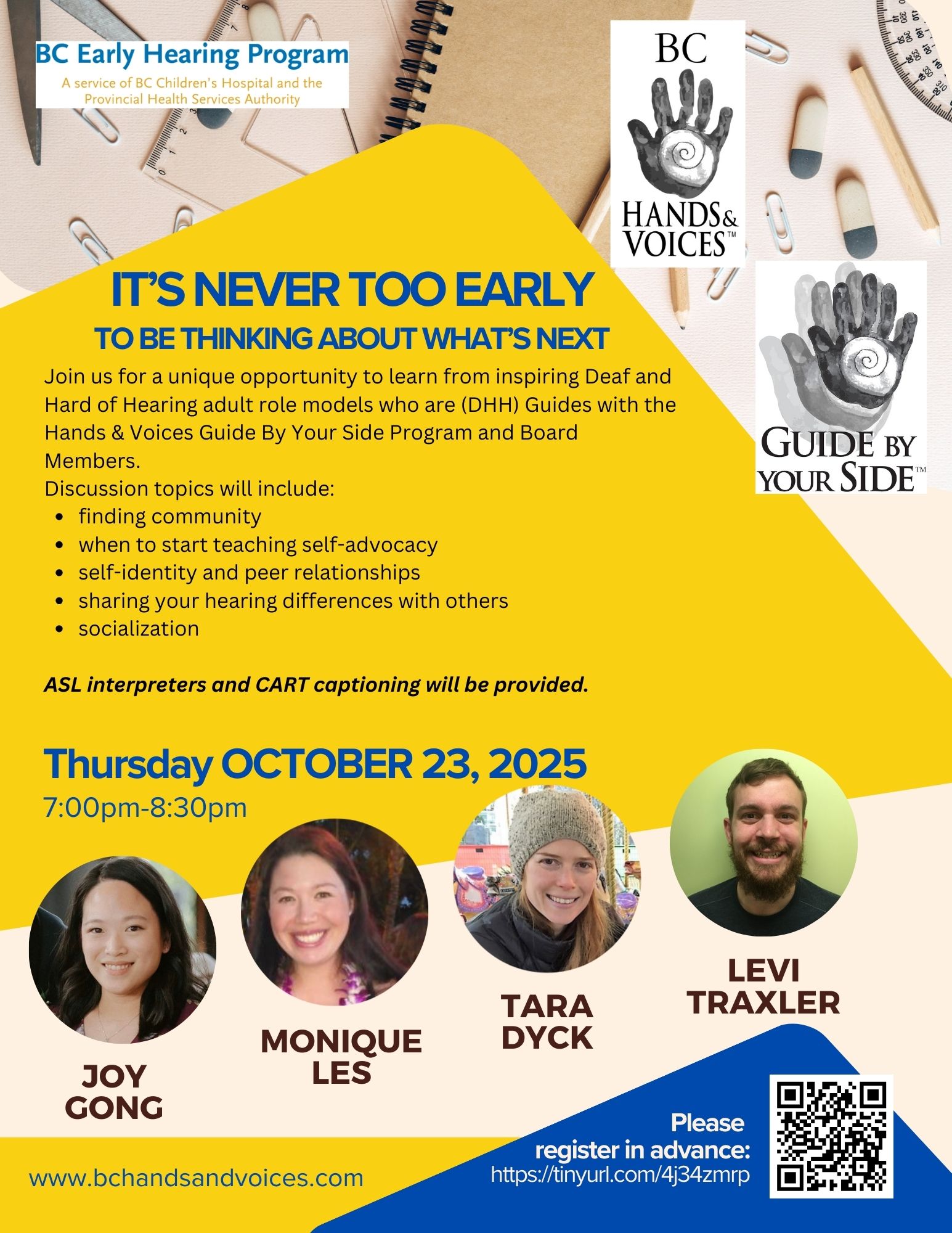
It’s Never Too Early To Think About What’s Next: Learning with Deaf/Hard of Hearing Adults

WHO:BC Hands & Voices, Guide By Your Side, BC Early Hearing Program
WHAT: Join us for a unique opportunity to learn from inspiring Deaf and Hard of Hearing adult role models who are (DHH) Guides with the Hands & Voices Guide By Your Side Program and Board Members. Speakers will share some of their experiences growing up as well as answer any questions you may have. Panelists will share some of their experiences growing up as well as:
-When to start teaching self-advocacy
-Sharing your hearing difference with others
-Finding community
-Self-identity and peer relationships
-Socialization
ASL interpreters and CART captioning will be provided.
WHEN: Thursday October 23, 2025 7:00pm-8:30pm
WHERE: Zoom
CONTACT/INFO: Register here: https://tinyurl.com/4j34zmrp

Download flyer here: DHHG-It’s Never Too Early 10.2025

Posted in Coffee Night, Events | Comments Off on It’s Never Too Early To Think About What’s Next: Learning with Deaf/Hard of Hearing Adults

Supporting a Hard of Hearing Child Through Kindergarten: What I Learned as a Parent

By: Stella Lee

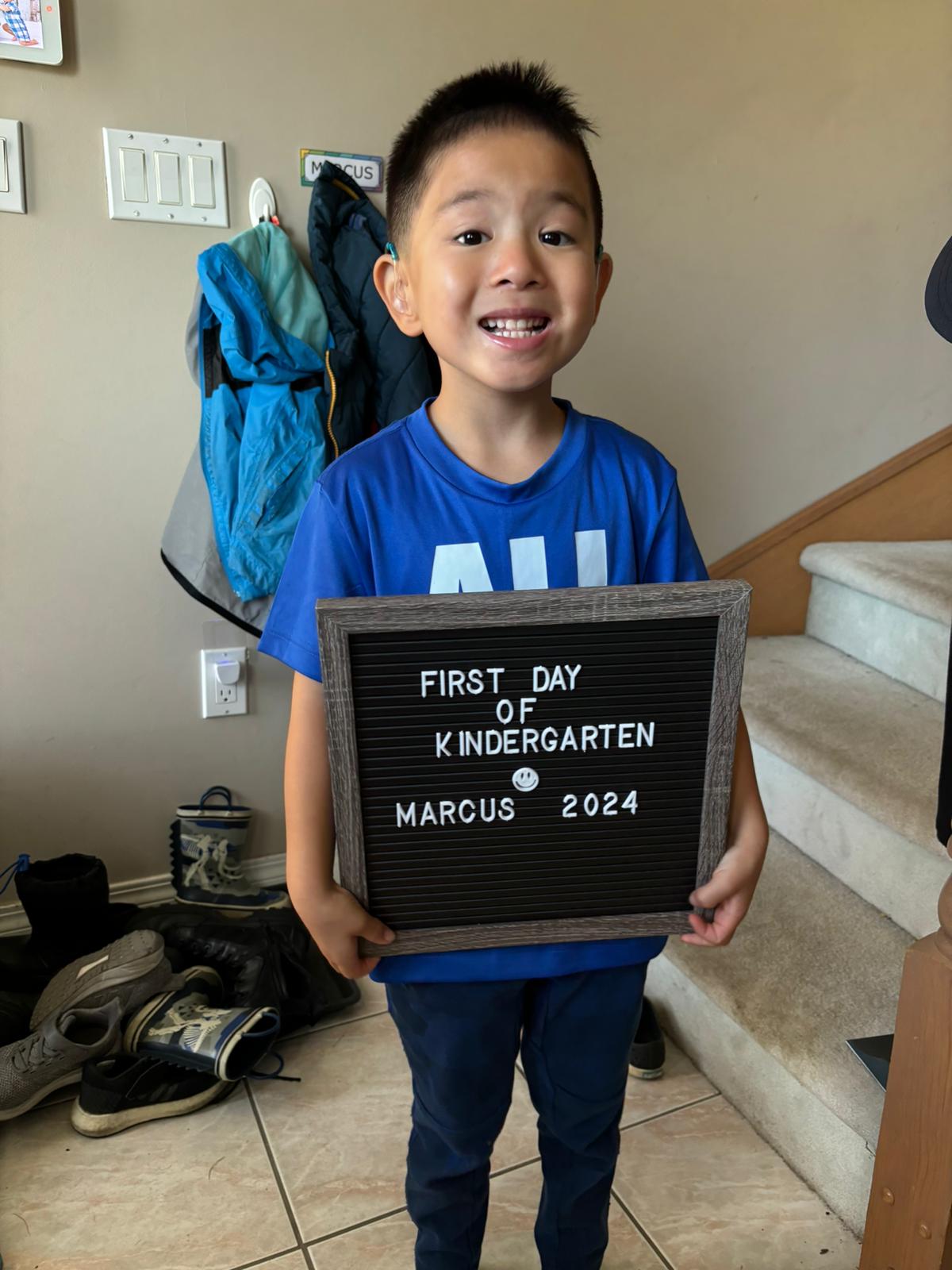
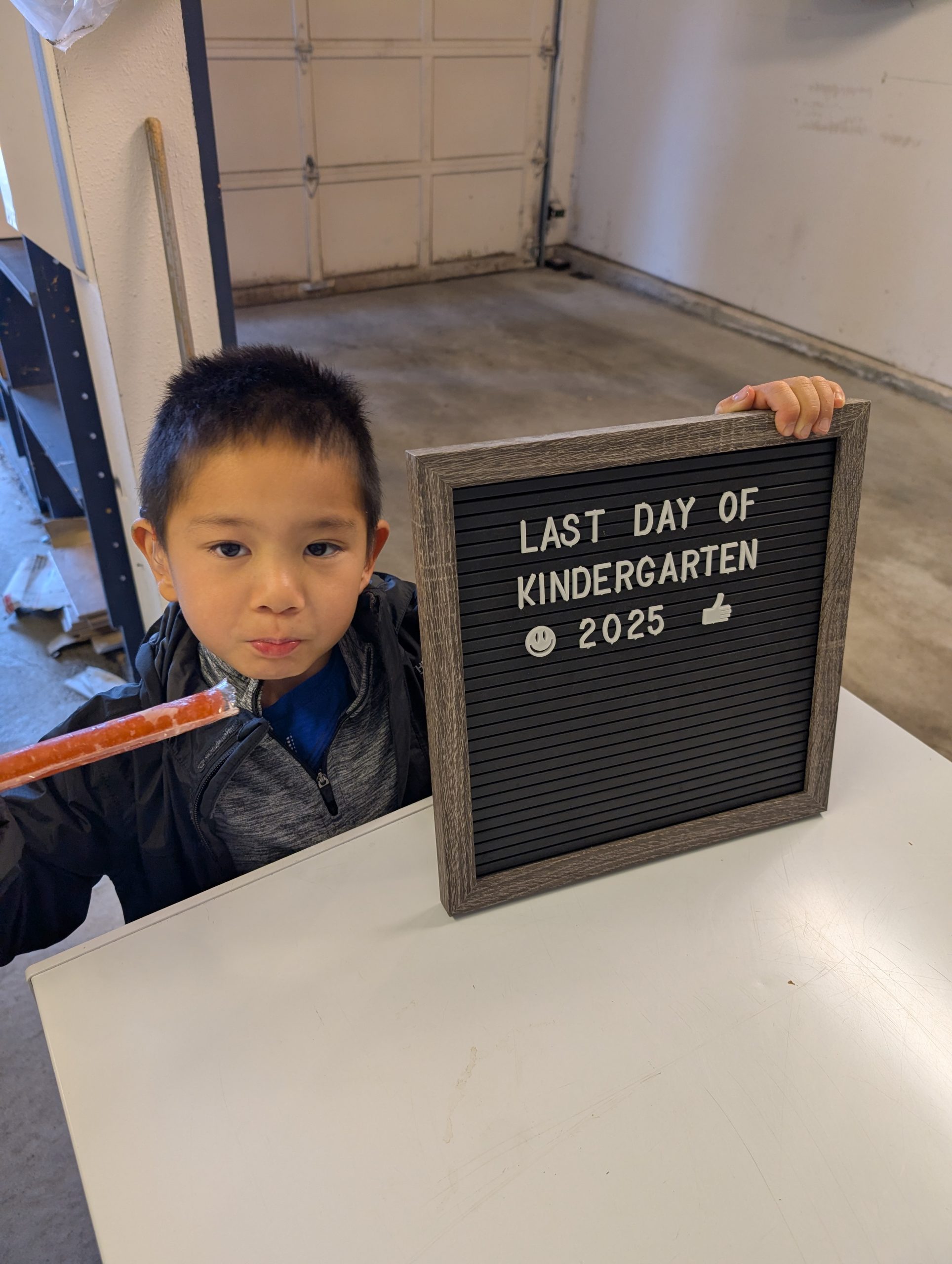
When my son Marcus finished kindergarten in June 2025, I took a moment to reflect on how far he had come—not just academically, but in his ability to advocate for his hearing needs. As a parent of a child who is hard of hearing, this past year has been a journey of learning, adapting, and growing—not only for Marcus, but for our entire family.

Early Preparation and the Power of Support

We were fortunate to receive an FM system in the summer of 2024, ahead of Marcus starting kindergarten. He had the chance to begin using it with daycare staff, which gave him some early familiarity. When it came time to transition into school, I made a specific request: I asked for our Teacher of the Deaf and Hard of Hearing (TDHH) to attend Marcus’ kindergarten intake interview.

That step made all the difference.

Our TDHH was incredible. She ensured the FM system was properly set up and took the time to train the classroom staff on how to use it. This early preparation gave Marcus a strong start, and it reassured me that we were setting the foundation for a successful year.

Building a Collaborative Team

In October, we had our first Individualized Education Plan (IEP) meeting. I was grateful to see both the TDHH and the school-based case manager working together to develop meaningful goals for Marcus. Since Cantonese is Marcus’ first language, he also received English Language Learner (ELL) support, which made a significant impact on his vocabulary and language development.

At one point during the year, I noticed communication between the various support teachers seemed to be going in different directions. Marcus at one point had 3 different support teachers, due to a teacher being on leave, and many were not following the literacy goal set out in the IEP. Instead of letting that continue, I sent a quick email to our TDHH. She responded quickly and helped bring everyone back together and focused on a unified approach for Marcus. That experience taught me that speaking up—even in small ways—can make a big difference.

Celebrating Growth and Small Wins

By the time we reached the year-end IEP review in June, it was encouraging to hear about the progress Marcus had made—both socially and academically. One of the milestones we were especially proud of was how he began learning to advocate for himself. He was still working on consistently remembering to take the FM system with him between classes, but he knew how to speak up when something wasn’t working with his hearing aids or the equipment. For a 5-year-old, that was a huge accomplishment.

Summer Practice and Continued Learning

Marcus attended Burnaby summer school in July, which gave him more practice in managing the FM system independently. As a family, we took it upon ourselves to ensure that the summer school staff knew how to use the equipment. On the first day, we brought the FM system in and reminded Marcus that he was responsible for handing it off to his next teacher after lunch. He managed that perfectly—but we forgot to check if he had it at the end of the day! Thankfully, his afternoon teacher noticed and sent the FM back to the morning teacher.

After summer school, Marcus attended camp through his afterschool care provider. We did have some challenges getting him to consistently wear his hearing aids, but we gave him a bit more responsibility. He knew he could store them in his case and just needed to tell an adult if he chose to take them off. Many of the staff had known Marcus since he was three, which gave us peace of mind—they understood his needs and supported him naturally.

Looking Ahead to Grade 1

As we prepare for Grade 1, I’ve learned that supporting a hard of hearing child is about balancing trust in the system with ongoing advocacy. Sometimes we need to take a step back and let our children grow independently. Other times, we need to step forward and ensure that their needs are being met—whether that’s through communication with teachers, checking equipment, or reminding staff of accommodations.

To other parents walking a similar path: trust your instincts, speak up when something doesn’t feel right, and celebrate the small victories along the way. Your child is learning not just how to hear, but how to be heard—and that’s a lifelong skill worth nurturing.


Posted in Advocacy, Articles, Families to Families | Comments Off on Supporting a Hard of Hearing Child Through Kindergarten: What I Learned as a Parent

Understanding Listening Fatigue in Children Who Are Deaf or Hard of Hearing

Based on a presentation by Natalia Rohatin-Martin, Assistant Professor, MacEwan University in February 2022.

“I feel bad for students who have to go through this every day… I’m exhausted.”
– A university student after watching a captioned video with no sound for the first time.

This powerful reflection highlights an often invisible challenge our deaf and hard of hearing (DHH) children face daily: listening fatigue. Dr. Natalia Rohatin-Martin, Assistant Professor at MacEwan University, shares research and lived experiences to shed light on this complex and misunderstood issue.

What is Listening Fatigue?

Fatigue isn’t just feeling tired—it’s a deeper, ongoing sense of exhaustion that isn’t solved with sleep. For dhh students, listening and communication require constant cognitive, visual, and social-emotional effort. Imagine trying to track conversations, visual cues, captions, and multiple speakers all at once—for six hours a day.

Unlike typical tiredness, listening fatigue affects concentration, memory, motivation, and even physical health. It can leave children too drained to do homework, socialize, or participate in activities they normally enjoy.

The 3 Types of Fatigue:

  • Cognitive Fatigue
    • Struggles with focus, zoning out, headaches, or blurry vision.
    • May result in missing information or needing frequent repetition. 
  • Physical Fatigue
    • Eye strain, muscle tension (even from signing), yawning, or general low energy.
    • Affects participation in sports, chores, or hobbies. 
  • Social-Emotional Fatigue

    • Feelings of sadness, frustration, isolation, or anxiety.
    • May avoid group work or feel hesitant to advocate for themselves. 

Common Signs Parents Might Notice:

    • Your child comes home quiet or irritable.
    • They want to nap or withdraw from activities.
    • They complain of headaches or eye discomfort.
    • They seem unmotivated to socialize or complete schoolwork. 

How Can We Support Our Kids?

  • Encourage Self-Advocacy
    Help your child understand their right to communication access. Practice asking for repetition, requesting that peers face them, or managing technology like FM systems.
  • Teach Recovery Strategies
    Create quiet downtime after school. Prioritize breaks and rest to help your child recharge.
  • Collaborate with Educators
    Share insights about your child’s needs and signs of fatigue. Advocate for flexible seating, reduced background noise, or access to transcripts and captioning.
  • Normalize the Experience
    Let your child know fatigue is valid and real. Build empathy among classmates and teachers whenever possible.

Natalia emphasizes that promoting independence and teaching children about their rights to access and communication support will help them manage fatigue more effectively. Her informative video is a helpful resource for parents, educators, and anyone supporting a child who is dhh. It offers not only valuable insights but practical strategies to reduce fatigue and foster a more inclusive learning environment.

? Watch the full video presentation here: https://www.youtube.com/watch?v=UOn8fJ_E2Lc


Posted in Articles | Comments Off on Understanding Listening Fatigue in Children Who Are Deaf or Hard of Hearing

What the Invictus Games Taught Me

By Jen Gow 

I had the privilege of volunteering at the Invictus Games in Whistler this past February. My family and I are involved in the cross country ski community and I often officiate at races. You can usually find me at the start line, helping to set athletes up for a strong start to their race. The Invictus Games were a perfect opportunity for me to put my skills to use.
  

The preparation for an international event like this takes a huge commitment from a large number of people; a process that starts years before and intensifies in the months and then the weeks leading up to the event itself. My role was small; nevertheless, I had to sign up many months in advance, go through safety checks and Invictus Games training, in addition to the technical sports officials training I already held.

The anticipation was palpable in the days leading up to the cross country skiing and biathlon events I was helping with. Mother Nature delivered outstanding conditions, with pristine snow and perfect cold sunny winter weather. Participants took part in a practice and orientation day prior to their events so they could ski the course and try the rifle shooting range. While some were experienced skiers, for others it was their first time on skis! Not only were they putting themselves out there to try something new, they were doing it while being filmed for worldwide TV coverage!

Cross Country Skiing was the first event, where skiers were challenged to push themselves through demanding conditions using adaptive techniques. Biathlon followed, with its skiing and rifle shooting stages. How many of five targets are missed determines the number of penalty loops an athlete has to ski. I believe biathlon was the most popular event at the Games; perhaps not a surprise given the shooting skills of many of the participants.

Reflecting on my experience, it struck me how many parallels there are between the Invictus Games and Deaf and Hard of Hearing community events, with both creating valuable opportunities for low incidence groups to come together to create community.

When I spoke with the chairman of the Invictus Games, Lord Allen of Kensington, he shared with me that one area where the Games have their biggest impact is breaking down isolation and loneliness by creating opportunities where participants can come together. By doing this in settings where barriers have been removed, participants can test their true limits and rediscover their confidence and self-worth.

Like the wounded, injured and sick service members participating in the Invictus Games, our d/deaf and hard of hearing (dhh) children are not alone. Our families may not live on the same street, in the same neighbourhood or even in the same town but there are many of us spread across the province and beyond. We may not get the chance to ‘bump into’ one another so we need to make a concerted effort to bring our children and ourselves together. 

The Invictus Games reminded me of the value in doing that. At our local, regional races, there are often just a few para-athletes; perhaps two or three sit skiers and one or two visually impaired skiers. At the Invictus Games, however, I had the pleasure of seeing these athletes together in large numbers where they were no longer the minority. The sense of belonging was palpable. I’ve experienced the same at DHH events; feelings of aloneness are broken down, sense of self is boosted and self-esteem and confidence are given a big helping hand. 

As well as bringing the participants together, it also created unique leadership opportunities for local para-athletes, who led the forerunning teams that went out prior to each race to smooth the ski tracks, and who coached the sit skier participants. Similarly, DHH events can create leadership opportunities for DHH adults and youth to be role models to our younger children; people just like them who they can look up to and be inspired by.

The Invictus Games events were set up to be fully accessible to participants, with attention given to every detail, be that adjusting the height of gates at the start line, doing away with podiums for medalists, or providing sit skis, guides and interpreters. By removing barriers to participation and creating an inclusive environment, all participants were able to participate to their full potential. The resulting atmosphere was electric; I could literally feel the buzz of the excitement, joy and exhilaration from the participants. Likewise, ensuring DHH events are fully accessible lets our children know what inclusion really feels like, and helps them to explore their full potential. 

An aspect of the Invictus Games I had not been aware of was that each participant is able to bring two support people with them, be that family, friends or care workers. This holistic model not only supports the participant themself but can bring about healing and reconciliation for all, and a broader feeling of community that includes those they love and those who are important to them. Including other family members in events for our DHH children can also help to foster understanding and inclusivity, and promote family well-being.

The part of the Invictus Games I was involved with was over in a few short days but it was obvious that their impact would last much longer; the events were a launch pad for connectedness, belonging and self-discovery. Regularly attending DHH events with our children can have a similar impact on them.

Just like the Invictus Games, creating events for our deaf and hard of hearing children takes commitment to put ideas into action. Events often happen thanks to dedicated individuals supported by an army of volunteers. Taking part in the Invictus Games reminded me of the value in making time to be part of these events for my DHH child and my family, whether that’s helping to organise or host an event, or to take part in it. Life can often feel full and creating that space isn’t always easy but the Invictus Games reminded me of the importance of being intentional about taking part in DHH community events. I hope you’ll join me!

Posted in Articles | Comments Off on What the Invictus Games Taught Me

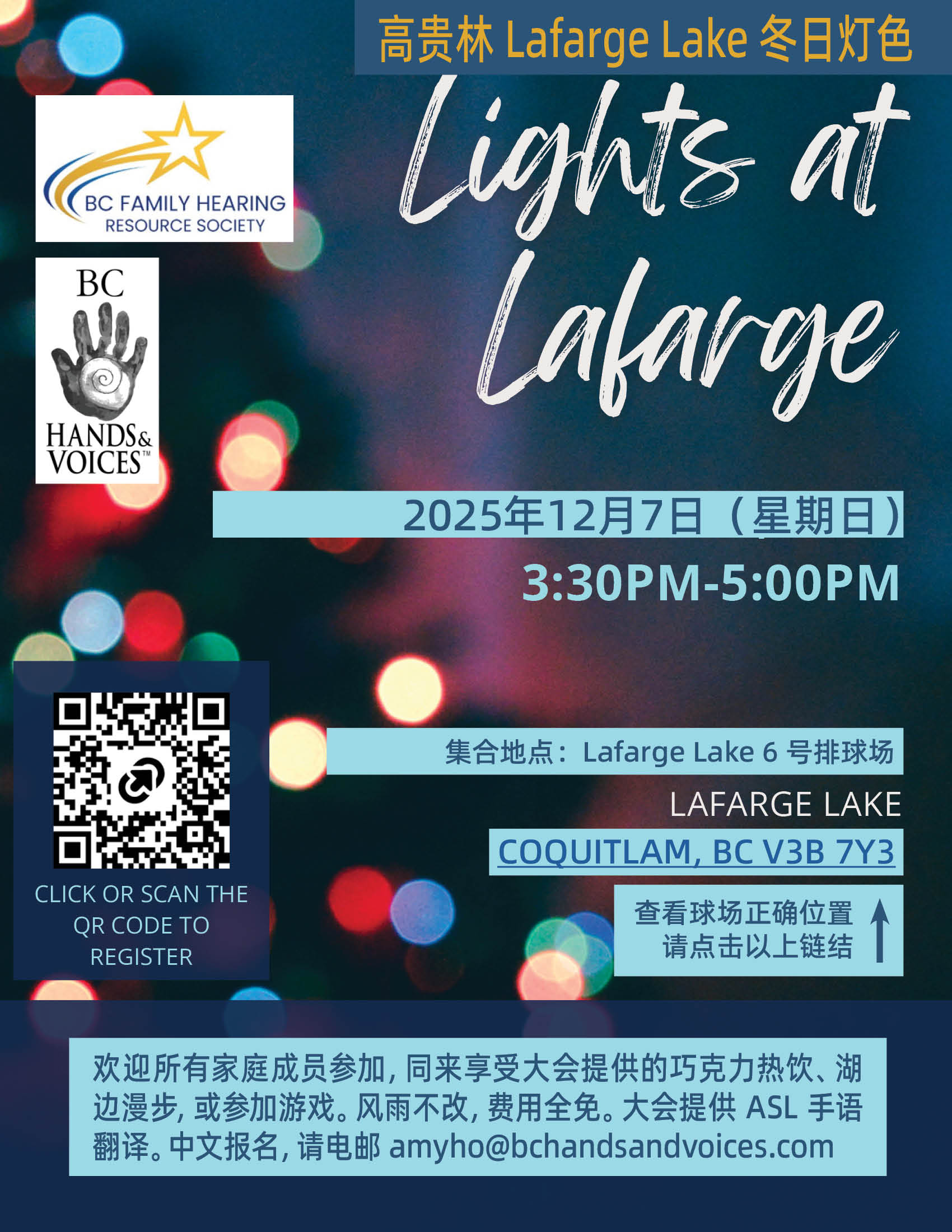
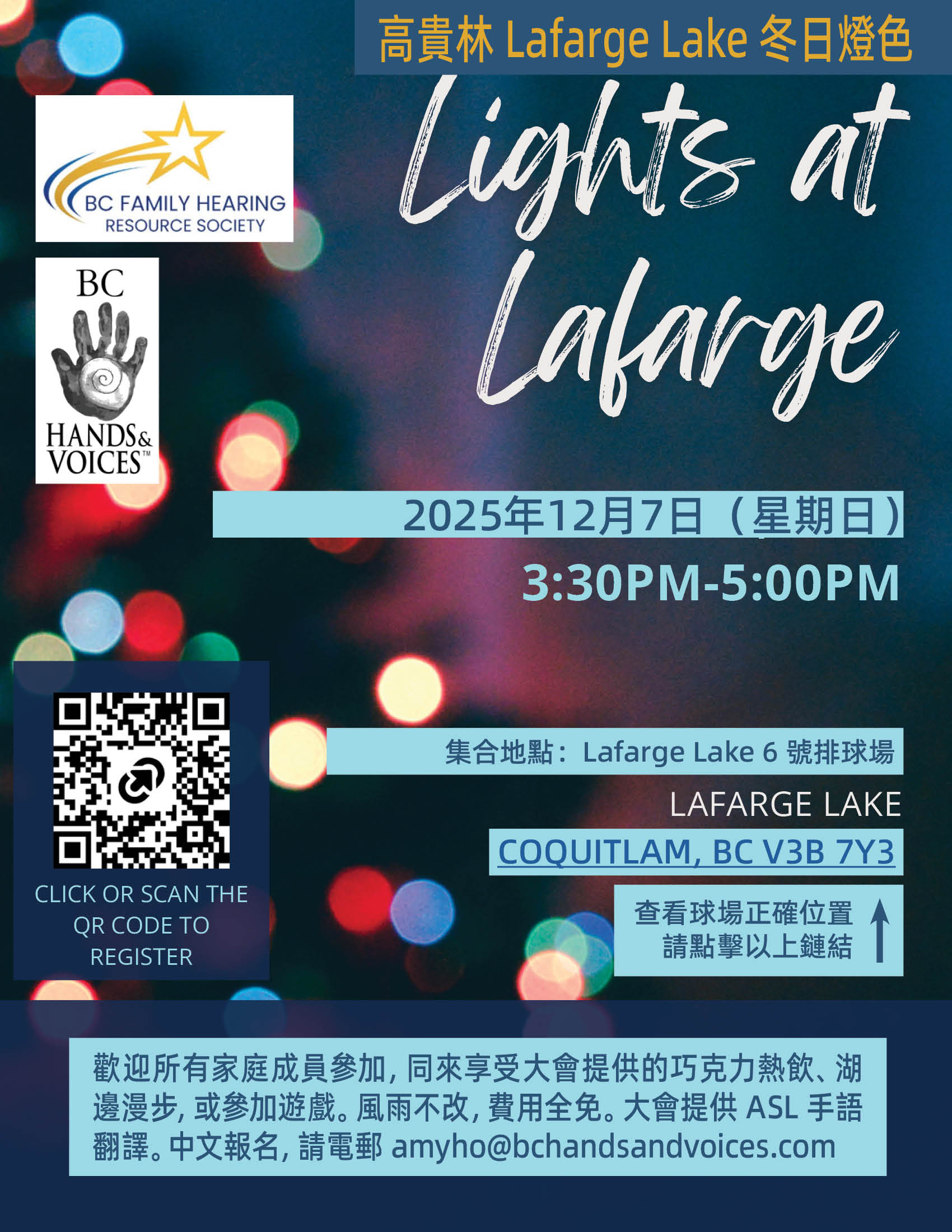
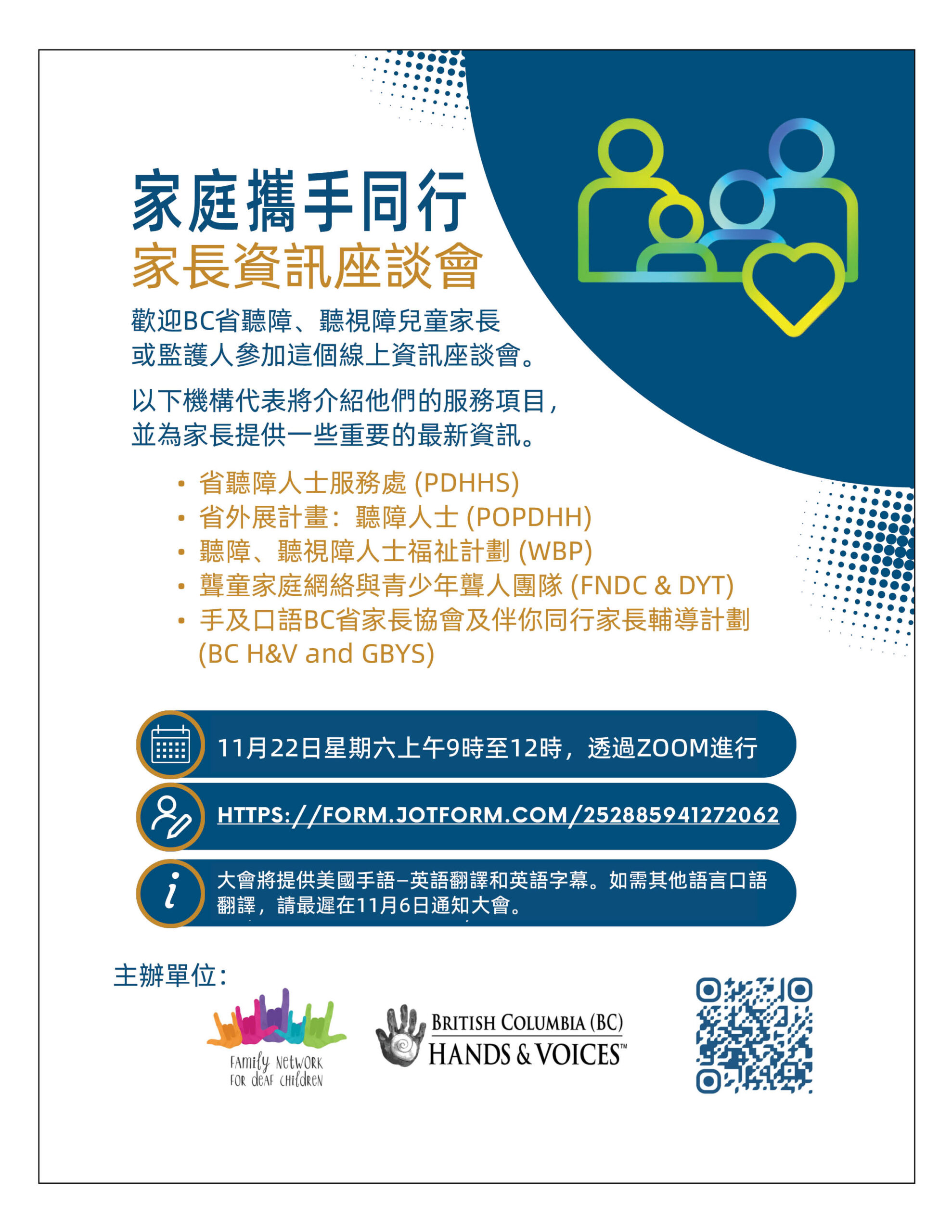
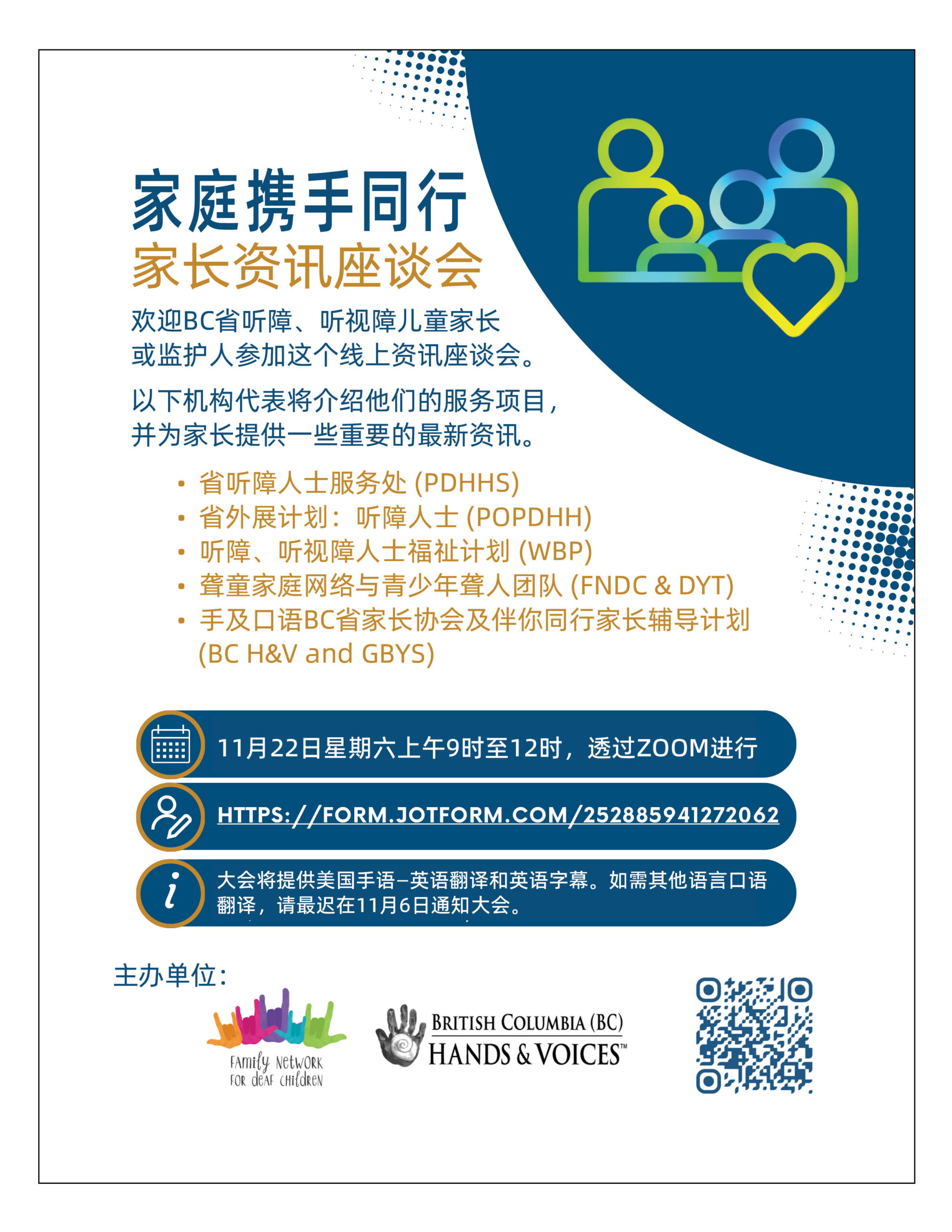
Summer Get-Together 2025- 中文 (Chinese)

For our Chinese speaking families.

Please register here: https://tinyurl.com/5bat6ycp


summer-get-together-2025-sc


summer-get-together-2025-tc

Posted in Events | Comments Off on Summer Get-Together 2025- 中文 (Chinese)

Summer Get-Together 2025

WHAT: Come out for a fun afternoon with other families with dhh children! (Please note this event is geared to 7 years and under) Look for the orange & blue balloons! (Parking lot closest to splash pad is at Beta Ave & Dundas Street.)
Bring a picnic lunch, blanket/lawn chairs & water gear if you want to get wet! Parents are responsible for their own children. ASL interpreter will be available.
Please check our FB (https://www.facebook.com/handsandvoicesBC) page on the day of as this is a weather dependent event.
WHEN: Saturday August 16 11:00am-2:00pm
WHERE: Confederation Park, Burnaby (Enter Confederation Park Water Park in your maps app)
CONTACT/INFO: Limited number of train tickets!

Register here: https://tinyurl.com/5bat6ycp

Download our flyer here: SGT 8.16.2025

Posted in Events, Families to Families | Comments Off on Summer Get-Together 2025

Beacon Hill Park

WHO: BC Family Hearing Resource Society & BC Hands & Voices
WHAT: You will find us at the duck pond across from the Petting Zoo. Come
rain or shine so come prepared for the weather, whether that’s blankets, and sunscreen or warmer and/or waterproof clothing! Grandparents & siblings are welcome to join. Snacks will be provided.
We will have duck seed for those who would like to feed the ducks.
Then we will head over to the playground for play, socializing & bubble blowing (we will supply the bubbles). Light snacks will be provided. Please let us know if your child has any food allergies.
An ASL interpreter will be on site. Spoken language interpretation available upon request.
WHEN: Saturday June 7 10:00am–12:00pm
WHERE: Beacon Hill Park, Victoria
CONTACT/INFO: RSVP: https://form.jotform.com/bcfamilyhearing/beacon-hill-park-meetup-2025

Posted in Events | Comments Off on Beacon Hill Park

Growing Up with Deaf Siblings

Levi Traxler, was born and raised in Ohio with his 4 siblings, 3 of whom are Deaf. He is
profoundly Deaf and he recently sat down for an interview with his brother, Paul Szefer (pictured below), who has typical hearing.

What was it like growing up with a deaf sibling?
At the time, I didn’t know it was any different. We played together, we argued, we worked
together to convince our parents to take us out to buy candy. I was lucky that ASL was emphasized in our family from a young age because communication was never an issue for us. Looking back, it was a big part of our family’s identity. Sign language was often the main method of communication. We went to events built around deaf culture – Deaf Deaf World, Camping at Hornby Island. We were constantly learning about Deaf culture and how to communicate as a family.

Were there any early moments that shaped your understanding of deaf culture?
Sitting around the campfire at Hornby Island, seeing how the stories were told with so much visual description brought an extra level of depth and emotion to the stories that are difficult to achieve verbally. I still remember some of them today 20 years later.

When did you first become aware that your sibling was Deaf?
There was no individual moment. It was part of our family’s culture from the time I was born. We were lucky that our parents made this a priority and it enabled us to be a lot closer.

Did you ever feel pressure to interpret or mediate communication for your sibling?
I did – I wanted to make things easier and ensure that communication wasn’t a barrier for my sister. Even now, I need to remind myself sometimes that it’s not my job, or that it’s okay to take a break.

Were there moments when you felt left out — or alternatively, too involved?
There were. When interpreting, I am acting as an extension of both people – my sister when I am speaking what she signs to me, and the other person when I am signing what is being spoken. It often felt strange in social situations to figure out where I fit into that dynamic. The more I shared my own thoughts or opinions, the less I was interpreting authentically. The less I shared my own thoughts, the less I felt as a part of the conversation.

What message would you give to other SODAs who might feel isolated or unsure of their role?
1. I recommend learning sign language because it makes communication easier and will enable you to have a richer relationship with your sibling.
2. It is not your job to interpret or act on behalf of your sibling. If they ask you for help and you feel comfortable, go for it!

Posted in Articles, Deaf Culture | Comments Off on Growing Up with Deaf Siblings

FAMILIES TOGETHER 2025- 中文 (Chinese)

Register here: https://form.jotform.com/251057911151045

2025 fun circle tc

2025 fun circle sc

Posted in Events | Comments Off on FAMILIES TOGETHER 2025- 中文 (Chinese)

Families Together- Fun Circle 2025

WHO:BC Hands & Voices, Guide By Your Side, Family Network for Deaf Children, Deaf Youth Today
WHAT: Plan to join us on the morning of Saturday, May 10th for this event bringing families with deaf/hard of hearing children together to play and socialize. An event for all ages.
There is a soft play area for little ones under 2 years, a climbing area with multiple slides for those over 3, a small indoor climbing wall and laser tag for those over 8. More info to come!
This event is a wonderful opportunity to mix & mingle with other families with kids of all ages and with youth/young adults who are deaf/hard of hearing.
WHEN: Saturday May 10th, 9:00am-11:00am
WHERE: Fun Circle Indoor Playground – 15355 Fraser Hwy #102, Surrey
CONTACT/INFO: email brianne@fndc.ca and register here: https://form.jotform.com/251057911151045

Please register by May 5th or until capacity is reached.

Download the flyer here: FunCircle 5.10.2025

Posted in Events | Comments Off on Families Together- Fun Circle 2025
    Sign Up for Our eNewsletter!
  • H&V Mission (ASL)

  • Guide By Your Side Program (ASL)

  • Diversity, Equity & Inclusion

    We at H&V are looking within ourselves and within the organization to do better in supporting Black lives Matter. Learn more HERE.

  • Upcoming Events

  • Recent Posts

  • Categories