Parents Sharing Their Experiences

ANOTHER SUCCESSFUL EVENT BY BC HANDS & VOICES

On Friday, October 16th, BC Hands & Voices held its 3rd event, this time hosting a parent panel. The event was held at Provincial Services for the Deaf & Hard of Hearing, at the Victory Hill site in Burnaby. We would like to express our gratitude to them for allowing us to use their boardroom for our event.

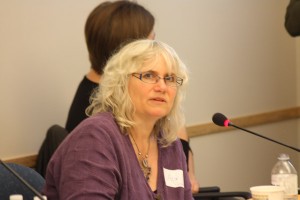
The panel was made up of parents who are either or both on our BC H&V board or who are members of BC H&V and are parent guides from the Guide By Your Side Program. Participating on the panel were: Amy Ho, Bobbi Best, Terri Dauvin, Monique Preer & Chris Mallinson. Each of the parents on the panel hoped to share their experience and knowledge in raising a child with a hearing loss with the parents in the audience and to answer any questions that the audience might have.

14 parents and a family friend attended the evening and made up our audience. Not a bad turn out for such a miserable night… rain, rain, rain. The evening proved to be a success, however, there was just not enough time, as is usually the case.

Upon arriving and settling in, we began by introducing the Hands & Voices board parents and parents on the panel.

MODERATED QUESTIONS COVERED THE TOPICS:

  1. What challenges the families faced and how they worked through them
  2. How they dealt with questions or lack of questions from relatives and friends
  3. How immediate and extended family members were affected by their child’s hearing loss
  4. Their feelings on the roles of Dads vs. Moms

THOUGHTS & EXPERIENCES SHARED BY THE PARENT PANEL:

Dealing with challenges It was difficult to find services in outreach communities. However, supports are available if one is willing to do the work of looking, asking, and sometimes traveling to find them. Being the main person to become educated about hearing loss and what to do to help his/her child. The parent is then considered the “expert” and feels the responsibility of making his/her child’s experience a success. One parent wished she had involved others (family & friends) in appointments and in the education process.

Being new to the country and not knowing what resources were available.

Having to choose a program for services and make decisions like “use sign language or an auditory/oral approach”. One parent felt she needed to make one choice versus the other, but later learned that they could change their approach as their child’s needs changed.

One child was born with many other challenges. When the parents learned that their son had a hearing loss, it was viewed by them as an issue that could be dealt with later, when their child was well enough to come home from the hospital.

Questions or lack of questions from others.

Gave them the facts/information about their child’s hearing loss and hearing aids.

Shared with them some ways to communicate with their children.

One parent commented that, “I am always pleased when people ask me questions about my son’s hearing, as I feel that teaching the people in his life about his hearing loss will ultimately help him.”

IMMEDIATE & EXTENDED FAMILY

Extended family benefited a lot from having children with a hearing loss in the family. They were brought together in a way that might not have happened otherwise. They all learned a lot about tolerance and acceptance.

One son who is sandwiched between two deaf siblings finds it hard sometimes, so his parents do their best to find time to spend with him alone. One parent talked about how her family all went through a grieving process, but was confident that they could handle the challenges, and that their deaf daughter could do as well as their hearing son. She also commented that there was a very strong bond between her older son and her daughter with a hearing loss, and they value each other’s ideas/ views very highly. For example, when her daughter was in Grade 11, she wrote an award-winning contest essay about how her older brother helped her improve her reading skills by bribing her with her favorite candies to get her to read more advanced books when she was in elementary school. A few years later, her hearing son would write a university Psychology paper about how his deaf sister acquired the English language despite her deafness.

ROLES OF DADS VS. MOMS

A Dad’s role is very important and just as important as a Mom’s role. Sometimes, husbands can come to meetings and doctor’s appointments, other times work prevents them from coming. One parent said that she is, “always careful, when I talk at these appointments to say ‘we’ because even though he is not there, it does not mean we have not discussed this at home (together as parents or as a family),” and this should be made clear to the children and others. Mothers and fathers should share the same responsibility.

One couple attended almost all medical and school appointments together except for the weekly physiotherapy sessions for their daughter’s first 2 years. When advocating for their daughter, one husband often edited the letter that his wife wrote so as to add more emphasis to the request by making it more concise.

The only father on the panel talked about how he had attended all of his son’s many surgeries, but felt terribly guilty when he had to miss one minor surgical procedure.

We all agreed that it is important that having both parents active and involved will lead to the greatest success for the child and the overall well-being of the family. It is crucial that everyone feels supported but this can look different in every family. A parent in the audience wished to hear from the panelists about their deaf/hard of hearing children and the children’s participation in group activities such as sports, clubs, etc.

RESPONSES FROM THE PANEL

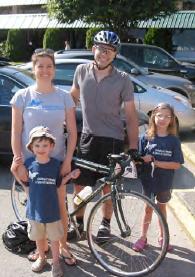
“My daughter is involved in several different sports. She participates in dance classes, basketball, horseback riding and cross-country running. She likes to ride her bike and four-wheeler. She has joined other activities like piano and choir. We find it helpful to use the FM system when we are going for a family bike ride.”

On self-advocacy: Give your child the choice about providing information about his/her hearing loss to those involved (coaches, instructors, leaders, and the other children). Do they want to talk about their hearing loss themselves or would they prefer their parents to give that information? Ensure your children make people aware of their hearing loss when they are in situations where they cannot hear. For example, children do not wear their hearing equipment when swimming. Tell your child to inform the lifeguard, “I am deaf and can’t hear you” when the lifeguard is talking to him or her. Parents found it really helpful to be a parent helper or leader in their child’s activities. One parent always went on field trips with her son, which was a great time for other parents to ask her questions about his ears and hearing aid. The questions came up naturally and she was able to help them better understand his needs. She recently was a trip chaperone, and even though her son is now a teenager, she was amazed at how many of his peers, other parents, and instructors asked her questions about his hearing.

One parent asked the swimming instructor to let the other children go first so that her son could watch the other children and know what to do, since he couldn’t hear the instructions. She also talked to the instructor or coach ahead of time, with her son, to explain his needs. As the son grew older, he took this role upon himself.

Unfortunately, this was when we ran out of time. We were happy that all the parents had an opportunity to talk and share their stories with each other during the break. We seasoned parents really understand and appreciate the value of parents networking. Thank you to everyone for coming out to this event and for taking part in the evening. For those of you who could not make it, we hope to see you at our next event. We are aware that some of you could not make it due to the fact that we were unable to provide child care. We apologize for this and hope to better meet this need in the future.

We welcome any ideas you might have for future events and please let us know if you have any to share!!

Posted in Events, Newsletter - Dec 2009 | Comments Off on Parents Sharing Their Experiences

Living with Hearing Loss in One Ear

By Diane Goodman

I am 63 years old, and have a thirteen year old grandson who is hard of hearing.

I first noticed my hearing loss in 1990, when I was 44 years old. I was staying the night at a friend’s house, and was irritated by the ticking of the alarm clock. However, when I rolled over in the bed, I couldn’t hear the clock at all. Around the same time, I attended a CNIB workshopand was blindfolded so I could get some idea of what it would be liketo be blind. Once the blindfold went on, I became not only blind, but extremely hard of hearing! I hadn’t realized how much I depended on visual clues to compensate for my hearing loss. Three years passed before I actually had my hearing checked.

Although the findings indicated I did indeed have a hearing loss in my right ear, I chose not to get a hearing aid. Over the years, I have learned some tricks to aid my hearing loss. I always try to walk and/ or sit so people are on my left side. Because my loss is mostly in the lower tones, I have the most difficulty hearing my husband. He also has a hearing loss, so we have some house rules. For example, don’t talk to me if you can’t see me, and call my name to get my attention before you talk to me. Also, because my hearing loss is only in one ear, and I have trouble locating where sound is coming from, tell me where you are! Crowds are difficult. When I am talking to a person in a noisy environment, I try to position myself so they talk into my good ear. Unfortunately, because people like to make eye contact, we end up turning in circles.

Because I don’t wear a hearing aid, I have to inform people of my hearing loss. I am always pleasantly surprised at how accommodating people are. Everyone always knows someone who is also hard of hearing. Actually, most people my age (63) seem to be hard of hearing!

Posted in Families to Families, Newsletter - Jun 2009, Unilateral Hearing | Comments Off on Living with Hearing Loss in One Ear

Moulds, Moulds and More Moulds

I have a collection of hearing aid ear moulds 9 to be exact. As a new born Connor started wearing his aids at 3 months, from there it seemed like his ears revolved aroundhis moulds! About every 6 weeks we would get a new pair. This meant that off we’d trot to the audiologist every 4 weeks to get fitted and then back again in another two weeks to pick up the moulds. The frequency of getting fittedfor ear moulds slowed after Connor turned a year old. For the next year from 1 to 2 we’ve only had to go get fitted 3 times. Now some advise for parents enjoy the ear mould fittings in the first year when the babies are getting fitted they are generally calm and hold still. In my experience this last year Connor is constantly squirming and does not like to get fitted! I have been told that this is just a phase so my fingers are crossed hoping that Connor at 2 will be much like he was at 6 months when he gets fitted the next time.

Posted in Babies, Families to Families, Newsletter - Jun 2009 | Comments Off on Moulds, Moulds and More Moulds

Beaming Hands and Voices

We had a very successful BC Hands & Voices (H&V) Family Social on Sunday, May 31. There were 49 people there, a chattering crowd that included parents, grandparents, children, H&V Committee members, and other volunteers. Children were everywhere, giggling and chattering.Several attendees commented upon the feeling of instant connection they felt with others who had raised or are raising children with hearing loss. A grandmother excitedly described how she felt the entire “room was buzzing – you could just feel it!”

One parent commented that she found it easier to discuss things with other parents who also had children with hearing loss that she could not or would not ask medical professionals. Another parent commented, “There are so many children – I thought mine was the only one.” It was the discovery of a new community that could figure importantly in the days to come.It was a scorching hot Sunday afternoon, so the air-conditionedrooms were crowded as nobody ventured out into the blazing parking lot. Parents were everywhere with their little ones; young mothers pushing strollers of wide-eyed babies and affectionate dads rocking their toddlers. A parent witnessed “two dads [who] were just talking so intensely.” Late in the afternoon, I espied one father tenderly watching over his sleeping son.

Overall, it was a fun, enjoyable day for the children with family sketches, nametags with colourful stickers, face painting — and lots and lots of food! Therewas so much food leftover that the cleanup crew wrapped up bundles of bread, cheese, and hams for some families to take home. Parents also deemed the day a success, a day of fun as well as a unique opportunity to connect with other parents of young children with hearing loss. One attendee summed up the whole day in a short statement: “You could tell everybody was just there to takein everything they could and to have fun.”

Posted in Events, Newsletter - Jun 2009 | Comments Off on Beaming Hands and Voices

Family Social 2009

BC Hands and Voices invites you to:

  • Meet other families who have young children with hearing loss
  • Meet a few parents with older children who are deaf or hard of hearing
  • Bring your questions and share your experiences
  • Learn more about us
Sunday May 31st – 11:00 am to 2:00 pm
BC Family Hearing Resource Centre (click for map)
15220 92nd Ave Surrey (corner of 152nd St. and 92nd Ave)
Some lunch food will be provided (beverages, meat, cheese, buns, fruit).  You are welcome to bring a snack, appetizer, salad, or dessert to share.  Some toys and activities will be set up for the kids.  We will also have an information sharing session after lunch – learn some tips from experienced parents!
Please RSVP by Friday, May 22nd to: info@bchandsandvoices.com
Please include your names, the age(s) of your child/children, and what you would like to bring.
Do you live outside of the lower mainland? Are you interested in connecting with other parents? We would love to hear your ideas for how we can include you in BC Hands & Voices events, or find other ways to help you connect. We are open to suggestions!

Posted in Events | Comments Off on Family Social 2009

Taking a Back Seat

Our son Scott was born unexpectedly at 24 weeks gestation one rainy night in early 2004.  He was just over one pound and we were told immediately to expect the worst.  The first few days were critical for survival, but Scott had what it took to fight.  In his first few months he battled a life threatening blood infection, a massive chemical burn caused by a skin sterilizing agent, jaundice, bleeding in his brain requiring surgery, heart surgery, and constant breathing difficulty.  Any of these alone can be overwhelming for first time parents, but all at once, it is indescribable.

As Scott grew stronger, and started breathing on his own, we were beginning to face long term issues.  We were told that it was almost certain Scott would not walk, due to damage caused by brain bleeds.  Preemies like Scott almost always have eye problems, and he was no different.  Scott had a 50% chance of losing his vision in each eye.  He also had an early hearing test that had inconclusive results, but indicated that he may have hearing issues.

With everything we were faced with at the time, the possibility of hearing loss seemed like something we could deal with, so it wasn’t our primary concern.  Vision loss scared us a great deal, and we were still trying to get Scott off his respirator.  This meant that the hearing issues, which were now confirmed, would have to take a back seat.

Five years later, with over 30 surgical procedures under his little belt, Scott is a happy little boy. His heart, brain, and lung issues have all cleared up.  The doctors were partially right about him not walking.  He prefers to run, jump, or climb.  He lost the vision in one eye, and is very near-sighted in the other.  Despite having very poor vision, he has learned to adapt well, and uses the vision he has with great efficiency.  He is completely deaf, and uses a cochlear implant to hear. With everything he has been through, his hearing, the issue that concerned us the least, is his biggest obstacle.  Scott still has difficultly communicating, but is getting help and is making good progress.

In hindsight, the fact that Scott was facing other medical issues made early intervention for hearing loss even more critical.  While early intervention is extremely important in all cases, an otherwise healthy child with hearing loss has the ability to adapt and integrate, either orally, or with ASL, to a hearing world with relative ease.  A child like Scott, whose vision loss can make it difficult to pick up sign language, and whose constant trips to the operating room can cause a great deal of stress, needs all the help he can get, and early intervention is a good start.

Posted in Families to Families | Comments Off on Taking a Back Seat

Survey for the Global Coalition of Parents of Deaf & Hard of Hearing Children

Hands & Voices has joined several other parent organizations worldwide to form the Global Coalition of Parents of Deaf & Hard of Hearing Children (GPOD).  Our goal is to increase awareness of the need for and improve the effectiveness of programs of support to families with children who have hearing loss.

The GPOD has developed a survey that you can complete on-line.

Online POD Survey

If you would prefer to complete a paper copy of the survey, and mail it in, please download the following PDF file.

PDF version of GPOD survey

Please forward this link, or document to as many parents of deaf and/or hard of hearing (DHH) children as you can.  The responses received will be analyzed at the University of Colorado/Boulder (USA) and the data derived from it will help form the foundation of recommendations for best practice to the various industries serving DHH children and their families including universal newborn hearing systems, early intervention programs, government agencies, and educational programs for the deaf and hard of hearing.

Research shows that the strongest indicator of successful outcomes for children who are deaf or hard of hearing is the effective involvement of their parents in all aspects of their lives (Yoshinaga-Itano, 2000).  Thank you very much for helping us promote this message to parents and professionals.

Posted in Advocacy | Comments Off on Survey for the Global Coalition of Parents of Deaf & Hard of Hearing Children

It’s Raining Hands & Voices!

One would expect only beautiful sunny weather at the end of August. Unfortunately we live in British Columbia and that means buckets of rain, any time of year. So when we planned our First Annual Hands & Voices Picnic for August 24th, we thought the weather would cooperate. No such luck. Although it rained, and I mean a true B.C. downpour, fun was still had by all! The kids enjoyed eating hotdogs and cupcakes, participating in arts and crafts projects, blowing bubbles and knocking down a colourful piñata. The parents had a chance to socialize under tarps and tents. We also had professionals from the area come out to support our new organization and see what we’re all about. All in all it was a successful event that left us soaking wet, but excited for more to come!

Posted in Events | Comments Off on It’s Raining Hands & Voices!

Registered Disability Savings Plans (RDSPs)

For the first $500 you contribute to your child’s RDSP, the government will contribute $1,500 to the plan. For the next $1,000 you contribute, the government will match it by another $2,000. Sounds too good to be true? Well, it’s true! Read on.

If your child is eligible for the Disability Tax Credit, you can set up an RDSP for him/her. Contributions to an RDSP may be supplemented by payments from the Canada Disability Savings Grant Program. Lower-income families may be eligible for assistance from the Canada Disability Savings Bond Program without having to make a contribution to an RDSP.

Both the Canada Disability Savings Grant (CDSG) Program and Canada Disability Savings Bond (CDSB) Program are administered by Human Resources and Social Development Canada.

Deadline for receiving the CDSG or CDSB for the year 2008: Set up an RDSP, and make the Grant or Bond application on or before March 2, 2009.

As of now, RDSPs seem to be available only at Bank of Montreal. You can call the BMO Investment Centre at 1-800-665-7700 to set up an RDSP.

For details, visit these sites:

www.hrsdc.gc.ca/eng/disability_issues/disability_savings/index.shtml

www.cra-arc.gc.ca/tx/rgstrd/rdsp/fq-eng.html

www.rdsp.com (A very helpful website set up by Planned Lifetime Advocacy Network, a non-profit enterprise that has led the advocacy work to make this disability savings plan happen.)

Posted in Families to Families | Comments Off on Registered Disability Savings Plans (RDSPs)

How the Cochlear Implant Has Helped Me

First presented at “Sharing Our Stories” workshop at A Cochlear Implant Conference for Parents And Interested Professionals run by BC Family Hearing Resource Centre in June 2002. Rosalind had been using the cochlear implant for almost 10 years back in 2002. She is now third year at the University of British Columbia, majoring in English Literature.

My name is Rosalind Ho. Today I’m going to talk about how the cochlear implant helps me, its limitations, and the best way to communicate with a cochlear implant user.

Without the cochlear implant, I wouldn’t be able to hear at all. With the implant, as well as years of practice, I can now distinguish human speech. I can hear people as separate voices and not just sounds. Also, I can usually tell one person’s voice from another. Unless the background is very noisy, I can usually carry a conversation with a hearing person.

However, the implant does have some limitations. I can hear music and the radio, and sometimes it sounds all right, and sometimes it’s just noisy. On the radio or TV, I can tell the difference between music and human speech, but I usually cannot understand all the words. Without background music, I can understand songs. Background noise can interfere with my hearing, and when it’s too noisy, it’s hard to follow a conversation. On the phone, voices aren’t always clear. When I listen to an ESL dialogue program on the internet, I can usually understand most of it. The fact that there is always a brief introduction before the dialogue is also quite helpful.

Perhaps you might want to know how I manage in the classroom. If the class is quiet and I’m sitting at the front, I can usually understand the teacher without looking at the interpreter. Of course, it requires a lot of concentration, and more so if the teacher walks around or turns his back to me.

I am now in Grade 8 in high school. The classes aren’t always quiet, so I’m glad that the school provides me with an interpreter so that I don’t miss anything important in class. Otherwise, I’d have a lot of problems.

When you speak face to face with a cochlear implant user, it is best to face him or her and speak naturally and clearly, but not too slowly. Gestures or sign language, if the cochlear implant user does sign, can help too. It is best to begin with something simple and not content-loaded. It’s basically the same thing when you speak to a cochlear implant user over the phone. Speak slowly, but not too slowly, and speak in a clear voice.

The cochlear implant offers many benefits. Without it, I would be completely deaf. With it, I can understand people’s voices and participate in a conversation. But the implant does have its limitations, such as when there is too much background noise or the sound is not clear. When you speak with a cochlear implant user, you should speak slowly and clearly.

With the implant, I am able to hear when I otherwise wouldn’t be able to. I also had to practice a lot and work hard at learning how to hear and then how to speak. My ability to hear as well as I do today is due to a lot of hard work as well as the support of all the doctors, audiologists, speech therapists, and teachers that have worked with me over the years. If you have a friend or a relative of yours who has a cochlear implant, there are many challenges and obstacles to overcome. However, if you persevere, keep an open mind, and work hard, the rewards that you reap will be great.

Thank you for listening to me.

Posted in Families to Families | Comments Off on How the Cochlear Implant Has Helped Me
    Sign Up for Our eNewsletter!
  • H&V Mission (ASL)

  • Guide By Your Side Program (ASL)

  • Diversity, Equity & Inclusion

    We at H&V are looking within ourselves and within the organization to do better in supporting Black lives Matter. Learn more HERE.

  • Upcoming Events

  • Recent Posts

  • Categories